Japan’s Selfie Diplomacy: Analysing Projected and Received Digital Self-Portraits on the YouTube Channel Japan Video Topics—English
Volume 26, Issue 1 (Article 3 in 2026). First published in ejcjs on 23 April 2026.
Abstract
This article investigates the construction and reception of Japan’s digital self-portrait (selfie), understood here as its national image created and promoted by the Ministry of Foreign Affairs (MOFA) through social networking sites, with a focus on Japan Video Topics—English, a YouTube channel operated by MOFA as part of its public diplomacy (PD) strategy. Employing the theoretical framework of selfie diplomacy, this study undertakes a thematic analysis of 214 video transcripts uploaded between 2015 and 2023, supplemented by sentiment and comparative thematic analyses of viewer comments. The findings indicate that Japan’s selfie is anchored in MOFA’s long-standing PD pillars. This continuity-oriented approach produces a relatively static image with limited responsiveness to shifting regional and international contexts. Audience reactions were generally positive, and the received selfie largely mirrored the projected one. However, divergences emerged, primarily driven by critical commentary on certain elements, which in some cases undermined the image’s credibility. This study argues for a hybrid model of selfie diplomacy that preserves thematic coherence and nation brand stability while integrating timely, event-responsive elements. Such an approach could mitigate credibility challenges and stimulate higher levels of audience engagement, which, to date, have remained comparatively modest.
Keywords: Japanese public diplomacy, digital diplomacy, nation branding, selfie diplomacy, YouTube videos, national image, audience reception.
Introduction
In May 2019, Japan’s Ministry of Foreign Affairs (MOFA) uploaded a video to one of its official YouTube channels, Japan Video Topics—English (JVTen), introducing an ultra-small water power generator developed by Sumino Seisakusho Ltd. Presented as revolutionary, highly portable, and sustainable, the video highlighted its potential for generating emergency power following natural disasters and supplying electricity to off-grid regions (JVTen, 2019b). The video attracted significant attention, garnering nearly six million views, but alongside praise, it also provoked criticism: viewers questioned the device’s size, originality, environmental implications, and limited output. This reception exemplifies how state-sponsored narratives can be interpreted and contested in digital public spheres, underscoring a broader dynamic central to contemporary public diplomacy (PD).
In an era shaped by social networking sites (SNS), state actors have increasingly turned to platforms such as Facebook, X, Instagram, and YouTube to project curated national images and cultivate dialogue with international audiences. Within this evolving landscape, the concept of ‘selfie diplomacy’ has gained prominence. Coined by Manor and Segev (2015), the term captures the logic of strategic digital self-representation, whereby state actors construct and disseminate ‘national selfies’ to influence external perceptions and support long-term relationship-building as part of their PD objectives. However, selfie diplomacy faces key limitations: its effectiveness depends on sustained engagement, timely responsiveness to international developments, and alignment between official messaging and prevailing global narratives. Without these conditions, national selfies risk being ignored, contested, or dismissed by digital publics (Manor, 2019).
Japan offers a compelling case through which to examine the practice and implications of selfie diplomacy. Since the early 2010s, MOFA has integrated SNS into its PD strategy to increase Japan’s international visibility, promote its policies, highlight its cultural richness and diversity, and generate interest in, awareness of, and support for the country (MOFA, 2024, p. 319). YouTube plays a central role in this strategy: through JVTen, MOFA distributes videos on Japanese food, traditions, pop culture, technology, daily life, and tourist destinations, all of which the Japanese government designates as soft power resources. Despite Japan’s sustained digital engagement, scholarship on selfie diplomacy remains heavily Western-centric, with limited attention given to how such strategies operate in non-Western contexts.
To address that gap, this study employs a mixed-methods analysis of JVTen videos to investigate how MOFA constructs Japan’s national selfie and how it is received and interpreted by international audiences. The findings suggest that MOFA’s digital self-portrait reflects long-standing pillars of Japan’s PD, indicating an approach oriented more toward continuity than responsiveness to global developments. While generally well-received, viewer critiques occasionally emerge in ways that may undermine the image’s credibility. In response, MOFA may benefit from hybrid strategies that balance narrative consistency with greater adaptability. In doing so, the study contributes to a more globalised understanding of selfie diplomacy, illustrating how non-Western states negotiate national image construction in participatory and often unpredictable digital environments.
The article proceeds in four sections. The first traces key conceptual developments in PD, from its origins in state-led communication to the emergence of digital and selfie diplomacy. The second outlines the evolution of Japan’s PD, with particular attention to digital initiatives. The third presents the case study, including research questions, methodology, and findings. The final section offers a discussion and conclusion.
Conceptual Transformations in Public Diplomacy: From ‘Old’ to ‘Selfie’ Diplomacy
The Old, New, and Digital Public Diplomacies
The concept of public diplomacy (PD) has evolved significantly over the years, informed by numerous interpretations from scholars and practitioners across various countries, making it difficult, if not impossible, to establish a single definition that fully captures the broad range of interests and practices associated with the term (Pamment, 2013, p. 6; Sevin, Metzgar and Hayden, 2019). While structural shifts in the historical relationship between diplomacy and modes of outreach further complicate any fixed notion of ‘old’ PD, the definition introduced in the 1960s by Edmund Gullion remains widely regarded as a pivotal moment in the field’s conceptual development (Cull, 2009, p. 19; Pamment, 2013, p. 6).
Gullion defined PD as the ‘influence of public attitudes on the formation and execution of foreign policies’ (Gullion, 1965, cited in Cull, 2009, p. 19). Central to this definition is the notion of influence directed at foreign publics, exercised ‘through the use of modern instruments and techniques of communication’ that made it possible ‘to reach large or influential segments of national populations—to inform them, to influence their attitudes, and at times perhaps even motivate them to a particular course of action’, which in turn enabled foreign publics to exert ‘noticeable, even decisive, pressures on their governments’ (U.S. Foreign Affairs Committee, 1964, cited in Pamment, 2013, p. 7). Consequently, twentieth-century PD emerged primarily as a monologic practice, characterised by top-down, one-way flows of information in which state actors disseminated messages to foreign publics with minimal opportunity for interaction.
This model began to shift in the early twenty-first century, particularly in the aftermath of the 9/11 terrorist attacks. A transforming world order, driven and reshaped by globalisation, technological innovation, and the rise of new media, eroded nation-states’ control over traditional political spheres and elevated the role of non-state actors in global affairs (Fitzpatrick, 2011, pp. 8–9). As a result, definitions of PD evolved from being procedural, describing an existing unidirectional process of understanding, informing, and influencing, to normative, prescribing how it should be conducted within a changed communications environment (Pamment, 2013, p. 8).
Such a reorientation gave rise to what scholars and practitioners termed ‘new’ PD, which shifted emphasis toward persuading foreign publics through dialogue, engagement, and relationship-building, rather than mere message transmission. Melissen (2005, p. 21) succinctly summarises this transformation, noting that ‘in the new public diplomacy, the accent is increasingly on engaging with foreign audiences rather than selling messages, on mutuality and the establishment of stable relationships instead of mere policy-driven campaigns, on the “long haul” rather than short-term needs, and on winning “hearts and minds” and building trust’.
Digital technologies and online platforms soon came to be seen as integral to this emerging model because they facilitated a shift from broadcast-oriented communication to dialogic forms rooted in mutual exchange. SNS, in particular, created favourable conditions for two-way interaction, allowing diplomats to connect directly with networked publics around shared interests, thereby becoming essential tools for cultivating enduring relationships (Manor, 2019, pp. 13–14). The incorporation of digital tools by PD actors was thus closely aligned with the aims and rationale of the new paradigm (Manor, 2019, p. 14).
Within this context, scholars have examined the use of digital technologies by state actors through a range of synonymous and often overlapping terms, most notably ‘digital diplomacy’. Hanson (2010, p. 3) broadly defines the term as ‘the use of the web and ICT to help carry out diplomatic objectives’. Bjola (2015, p. 4) narrows the scope to SNS, describing digital diplomacy specifically as their use for diplomatic purposes. Holmes (2015, p. 15) conceptualises it as a strategy for managing change through digital platforms and virtual collaboration. Sotiriu (2015, pp. 35–37) foregrounds its public diplomacy dimension, explaining how diplomatic actors harness technological innovation to reach external audiences and deliver targeted messages or images. Beyond its operational role, digital diplomacy has also become a valuable asset in nation branding efforts (Manor and Segev, 2015, p. 89).
Nation Branding and Selfie Diplomacy
Nation branding can be defined as ‘a process by which a nation’s images can be created, monitored, evaluated and proactively managed in order to improve or enhance the country’s reputation among a target international audience’ (Fan, 2010, p. 101). Much like PD, it focuses on cultivating a positive national image and promoting the country’s culture and values, core elements of its brand and international identity, to global audiences (Szondi, 2008). SNS bolster these efforts by enabling direct dialogue with users worldwide and facilitating the production of content tailored to evolving international perceptions of the nation (Manor and Segev, 2015, p. 94).
Recognising the increasing centrality of digital platforms, particularly SNS, scholars have proposed new theoretical models better to understand how states actively shape their images online. Among these is ‘selfie diplomacy’, introduced by Manor and Segev (2015), which explicitly positions nation branding within the broader logic of digital self-representation. They contend that ‘nation branding may be viewed as an attempt by a nation to draw its self-portrait. In the age of social media, such self-portraits are known as “selfies”. Thus, the art of nation branding practiced via social media may be referred to as “selfie diplomacy”’ (Manor and Segev, 2015, p. 96).
As a form of image management, selfie diplomacy creates new opportunities for shaping foreign perceptions through direct communication on SNS and may help overcome some of the limitations associated with earlier nation branding strategies (Manor and Segev, 2015, p. 97). These platforms offer specific tools and interfaces that allow state actors to reach users instantly and at scale, fostering interactions that may influence global perceptions of the nation, a key objective in strategic digital self-representation (Manor and Segev, 2015, p. 97). This direct mode of outreach makes selfie diplomacy particularly effective in challenging entrenched stereotypes (Manor and Segev, 2015, p. 97). It also facilitates the advancement of curated national narratives, referred to as ‘national selfies’, that illustrate how a country’s actions and policies align with globally accepted values and norms (Manor, 2019, p. 263). Such narratives often emphasise conformity with international standards over distinctiveness and tend to foreground national achievements while downplaying shortcomings, thereby constructing a carefully managed and favourable portrayal of the state (Manor, 2019, p. 263).
Despite its potential, selfie diplomacy faces several limitations. As Manor (2019, p. 265) argues, its success relies on diplomats’ sustained commitment to online interaction and the long-term cultivation of relationships, conditions that are rarely met. Credibility poses another challenge: to resonate, national selfies must broadly align with the country’s portrayal in global media. Significant gaps between self-representation and external narratives may lead digital publics to reject official messaging altogether (Manor, 2019, p. 265). Responsiveness is equally critical, as national selfies must address unfolding international and regional events in real time to meet expectations for timely commentary. To ensure coherence and credibility, such developments, and the policies they prompt, must be framed in ways that reaffirm the nation’s professed values and principles (Manor, 2019, p. 265). Finally, a compelling national selfie must also draw on the past. Referencing historical narratives enables contemporary developments to be situated within a broader temporal context, helping digital audiences make sense of the present through the nation’s historical trajectory (Manor, 2019, p. 266).
As a theoretical framework, selfie diplomacy provides researchers with a lens to assess both the image a nation seeks to project and its resonance with target audiences (Manor and Segev, 2015, p. 214). One context in which this model can be productively applied is Japan.
Japan’s Public Diplomacy: From ‘Old’ to ‘Selfie Diplomacy’
The term ‘public diplomacy’ was formally introduced in Japan in 2004, when MOFA adopted the katakana transliteration paburikku dipuromashī in the 47th edition of its Diplomatic Bluebook, the annual report on Japan’s foreign policy and diplomatic activities (Mikami, 2007, p. 246). MOFA (2005, p. 207) characterised PD as ‘an approach that does not rely on traditional diplomacy between governments but rather enlists the cooperation of the private sector to directly reach out to the people and public opinion of foreign countries’. According to Nishikawa and Ogawa (2024, p. 157), the term entered Japanese diplomatic discourse via officials stationed in the U.S. around 2000, resulting in a framework shaped more by American conceptions of old PD than by distinctly Japanese approaches.
PD’s adoption coincided with the popularisation of ‘soft power’, a concept coined by Joseph Nye in 1990 and brought to prominence with his 2004 monograph Soft Power: The Means to Success in World Politics. Nye (2004, p. x) defined it as ‘the ability to get what you want through attraction rather than coercion or payments’, rooted in ‘a country’s culture, political ideals, and policies’. MOFA (2005, p. 207) adapted this concept to highlight ‘the ability to attract another country through the appeal of traditional values or culture’, suggesting that such attractiveness ‘can improve a country’s image, enhance its diplomatic resources, enhance national security in the broad sense, and secure the safety of Japanese nationals abroad’.
To advance PD and capitalise on Japan’s cultural appeal as a resource of soft power, in August 2004 MOFA established the Public Diplomacy Department as part of a broader set of reforms initiated in 2002. The department aimed to integrate international public relations and cultural exchange, the two foundational pillars of Japan’s PD, into a more coherent structure, and to promote collaboration between governmental agencies and private-sector actors (MOFA, 2005, p. 207). Then-Prime Minister Koizumi Jun’ichirō also convened the Council on the Promotion of Cultural Diplomacy, which emphasised the importance of fostering global understanding of Japan and enhancing its reputation through the transmission of its culture, values, and thought (Council on the Promotion of Cultural Diplomacy, 2005).
Further institutional restructuring followed in August 2012, leading to the creation of the Press Secretary/Director-General for Press and the Public Diplomacy Strategy Headquarters (MOFA, 2013, p. 32). This reorganisation sought to streamline communication by integrating press relations, international messaging, and cultural diplomacy under unified leadership, thereby strengthening Japan’s international outreach (MOFA, 2013, p. 32). Since 2014, MOFA has employed the term ‘strategic communication’ to describe its PD activities, structured around three key priorities: (1) increasing the visibility of Japan’s policies and global stances; (2) showcasing Japanese cultural richness and diversity; and (3) generating global interest in, awareness of, and support for Japan (MOFA, 2015, pp. 302–303; MOFA, 2024, p. 319). Although not based on a formal strategy or doctrine, this framing reflects a shift toward a more explicitly strategic orientation (Aoi, 2017; Snow, 2022; Ogawa, 2022).
While the term public diplomacy was only formalised in 2004, scholars including Matsumura (2002), Ogoura (2009), Kaneko (2014), Watanabe (2017), Ogawa (2020), and Ueda (2021) argue that PD practices have been central to Japan’s foreign policy since the late 1860s, when the country began its modern nation-building process and sought to shape its global image. This continuity extends into the digital domain: MOFA’s early web-based efforts before 2004 can be viewed as precursors to its current digital diplomacy, given their aim to project a particular image abroad. For instance, in April 1995, MOFA (1997) launched its official website, later supplemented by the Japan Information Network (MOFA, 2002, p. 199), which provided general information about Japan. By 2000, its web presence had expanded to include multilingual content in English, Korean, Chinese, and other languages (MOFA, 2001). The launch of Web Japan in 2004 further advanced these efforts by providing comprehensive, multilingual information on Japanese society, culture, and policy (MOFA, 2004, p. 211).
Since 2013, MOFA has incorporated SNS, such as Facebook, X, Instagram, and YouTube, into its PD toolkit to disseminate timely, strategically curated content (MOFA, 2019, p. 291; MOFA, 2025). This progression from static websites to interactive platforms reflects the logic of selfie diplomacy. Japan now engages foreign publics online to construct and project a curated self-portrait of its culture and values, framed by MOFA as key soft power assets. Through this form of digital engagement, Japan not only manages its international image but also seeks to foster dialogue and build reciprocal relationships, advancing its PD goals in the digital age.
Although selfie diplomacy has been explored in various national contexts, existing scholarship remains focused largely on Western cases. For example, Manor and Segev (2015), Manor (2017; 2019), Ventura (2024), and Kacziba, Gibárti, and Lechner (2025) have examined digital self-representation in the U.S., Poland, Ukraine, and Greece, respectively. In contrast, Japan has received relatively little focused scholarly attention, despite its sustained and strategic investment in digital PD. While it appears in comparative analyses of digital diplomacy (e.g., Bjola and Jiang, 2015; Park, Chung and Park, 2019; Nishikawa, 2022; Lee and Shahin, 2023), no study to date has examined Japan’s selfie diplomacy as a primary focus. This gap limits our understanding of how selfie diplomacy operates in non-Western contexts and how national self-images are shaped and received within different cultural and geopolitical environments. To address this omission, the present study investigates Japan’s selfie production and reception through an analysis of the YouTube channel Japan Video Topics—English (JVTen), a core platform in MOFA’s online outreach strategy.
Japan’s Selfie Diplomacy in Practice: The Case of Japan Video Topics—English
Background of the YouTube Channel
Launched on 30 March 2015 and operated by MOFA, JVTen is a YouTube channel that aims to provide ‘a constant stream of insights into Japan that most people never see’ (JVTen, no date). As of 7 November 2024, the channel had 63,600 subscribers, 17,280,571 views, and 267 uploaded videos, categorised into six thematic playlists: Foods, Traditions and Culture, Technology, Way of Life, Japan’s Famous Places, and Pop Culture.
Prior to its YouTube debut, JVTen originated as a video series produced by MOFA in the 1960s, distributed to Japanese diplomatic missions abroad and broadcast by international television networks (JVTa, no date). With the rise of Internet adoption, the series migrated to Web Japan in August 2004. Initially, videos were available for limited periods (typically two weeks to one month), but from 2005 onward they became permanently accessible online. Between 2004 and 2014, 284 videos were streamed via Web Japan, originally offered in six languages: English, French, Spanish, Chinese, Arabic, and Korean. Japanese was added in 2008, and Portuguese replaced Korean in 2009. Only 27 of these 284 videos were transferred to YouTube upon the channel’s launch. [1] By December 2023, a total of 218 videos had been uploaded.
Research Questions
Unlike other digital public diplomacy initiatives introduced by MOFA, JVTen was selected as the case study because it was designed specifically to distribute video content that promotes a strategic selfie of Japan, making it a uniquely targeted tool within MOFA’s digital diplomacy framework. Using the theoretical lens of selfie diplomacy, this study examines how Japan constructs its digital self-image through the channel and how this image is received and interpreted by global audiences. To this end, the research investigates three central questions:
RQ1. What selfie of Japan does MOFA construct through JVTen?
RQ2. How do international viewers receive and respond to this selfie?
RQ3. To what extent does this reception align with MOFA’s intended portrayal?
Data Sample and Retrieval
To explore these questions, this study analyses 214 videos uploaded between the channel’s launch in 2015 and the end of 2023. Although 218 videos were published, four were duplicates (with and without subtitles) and were therefore treated as single entries to ensure accuracy. All data in Table 1 were collected on 7 November 2024 using the Apify YouTube Scraper (actor ID: h7sDV53CddomktSi5), an automated tool designed to extract publicly accessible metadata from YouTube.

Table 1: Aggregated performance data for JVTen, 2015-2023. Compiled by the author.
Each of the 214 videos was transcribed using Notta, an AI-powered service that converts audio to text, capturing both voice-over narration and spoken contributions from featured individuals. Transcripts were produced verbatim to preserve original language and structure. As all videos were in English, no translation was required. Although background music and ambient noise occasionally introduced minor errors, all transcripts were reviewed and edited by the author to ensure a high degree of accuracy.
Thematic Analysis of Video Transcripts (RQ1)
To address RQ1 (What selfie of Japan does MOFA construct through JVTen?), this study employed thematic analysis, an approach previously applied in selfie diplomacy research (Manor and Segev, 2015; Manor, 2017; Manor, 2019), and here operationalised through a four-stage process combining computational tools with manual interpretation to identify recurring motifs in the transcripts that illustrate how Japan constructs its selfie.
First, linguistic metrics were derived from the complete transcript corpus using Voyant Tools, a web-based platform for textual analysis that visualises word frequency, distribution, and co-occurrence. Key indicators, shown in Table 2, include: tokens (the total number of word occurrences), types (unique word forms), type-token ratio (TTR; the proportion of distinct terms relative to the full word count, indicating lexical diversity), and average tokens per sentence (a proxy for syntactic complexity).

Table 2: Linguistic metrics for JVTen transcripts, 2015-2023. Compiled by the author.
Second, the most frequently occurring terms were extracted from the corpus using Voyant Tools. To prioritise analytically meaningful vocabulary, only words appearing at least 100 times were retained. Morphologically related forms (e.g., ‘year’, ‘years’) were grouped under a common lemma (e.g., ‘year’) through manual lemmatisation. The resulting list is presented in Table 3.
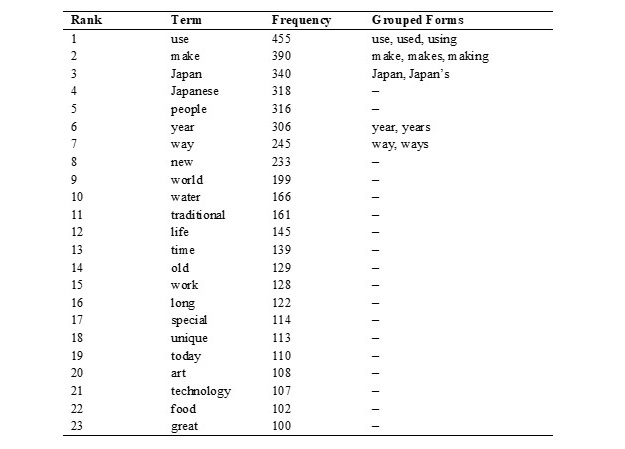
Table 3: High-frequency terms (n=23) grouped by lemma in transcripts. Compiled by the author.
Third, for each high-frequency term, Voyant Tools was used to retrieve the ten most common collocates (words appearing in proximity) and the ten strongest correlations (terms consistently associated across the corpus). Collocates provide insight into local lexical context, while correlations point to broader semantic patterns. For lemmatised entries, results were extracted separately and then merged for consistency. These are summarised in Tables 4 and 5.
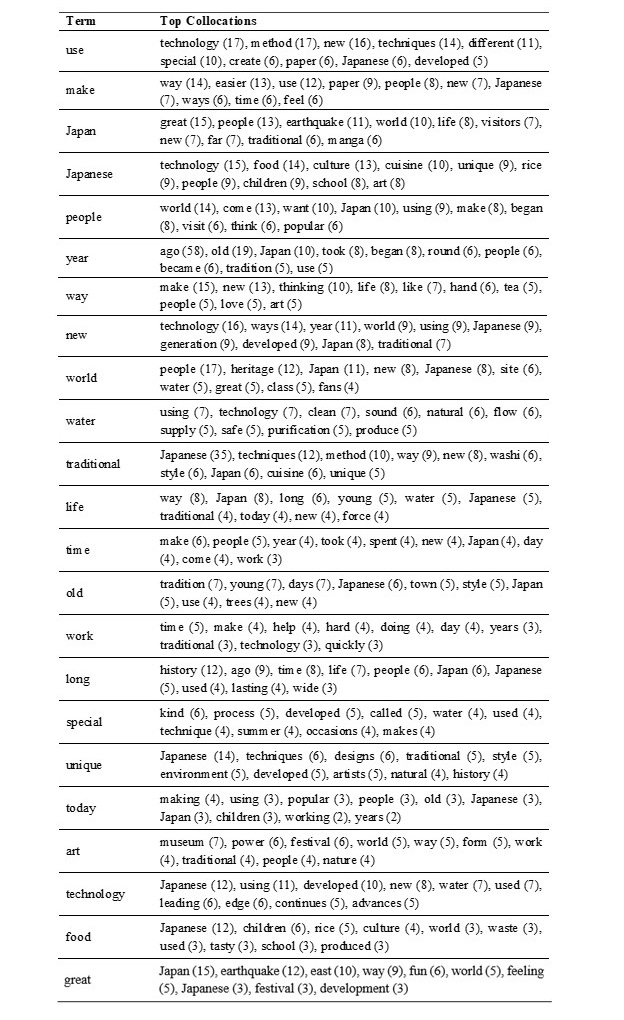
Table 4: Ten most frequent collocates for high-frequency terms. Compiled by the author.
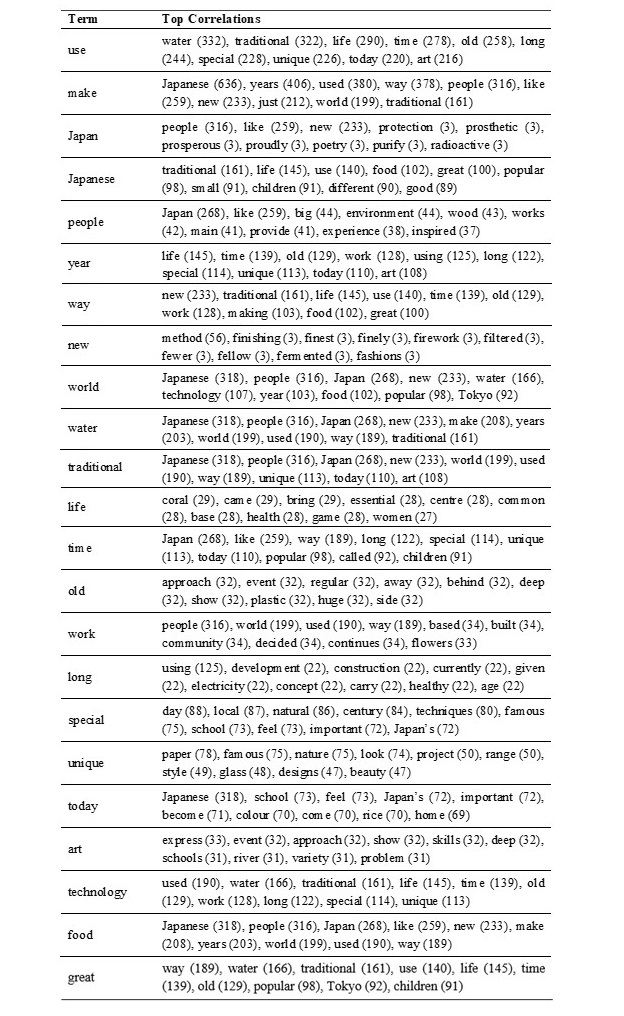
Table 5: Ten most frequent correlations for high-frequency terms. Compiled by the author.
No additional merging of synonyms or related forms was undertaken at this stage, in order to maintain lexical precision and minimise interpretive distortion.
Fourth, a close reading of transcripts containing these high-frequency terms was conducted to explore their contextual function, surrounding vocabulary, and discursive role. This interpretive step was guided by the lexical associations identified in the previous phase.
The process ultimately produced five overarching thematic strands, which serve as the comparative framework for analysing Japan’s projected and received selfie (see RQ3).
Sentiment Analysis of Viewer Comments (RQ2)
To examine RQ2 (How do international viewers receive and respond to this selfie?), sentiment analysis was applied to assess how international audiences responded to the videos. Defined as ‘a series of methods, techniques, and tools about detecting and extracting subjective information, such as opinion and attitudes, from language’ and typically concerned with ‘opinion polarity, i.e., whether someone has a positive, neutral, or negative opinion towards something’ (Mäntylä, Graziotin and Kuutila, 2018, p. 16), sentiment analysis in this study was used to classify user responses by emotional tone and to shed light on viewer reception of Japan’s selfie.
A total of 7,474 comments were collected on 7 November 2024 using the Apify YouTube Comments Scraper (actor ID: p7UMdpQnjKmmpR21D). Because commenting was disabled on videos uploaded in 2015-2016, only responses from 2017 to 2023 were included. The comment corpus was manually filtered to retain entries that referenced Japan or Japanese people, evaluated the video content (e.g., ‘amazing’), or discussed specific elements. Removed were non-English posts, unrelated anecdotes, promotional material, emoji-only replies, off-topic threads, and comment replies. This process resulted in a refined sample of 3,910 comments.
The final corpus was analysed using the Twitter-roBERTa-base model developed by Cardiff University (Barbieri et al., 2020), selected for its strong performance on short, informal social media texts. The analysis was performed in Google Colab, a cloud-based platform suitable for intensive computational tasks.
Since two videos received disproportionately high numbers of comments—Ultra-Small Water Power Generator (1,570 after filtering) and Japan’s Most Faithful Dogs: The Akita Inu (886)—subset analyses were conducted to assess the robustness of the findings. Three subsets were defined: Set A excluded both videos, Set B included Akita Inu only, and Set C included Water Power Generator only. This strategy was intended to minimise the influence of outlier volumes on overall sentiment trends.
Comparative Thematic Analysis of Transcripts and Comments (RQ3)
To explore RQ3 (To what extent does this reception align with MOFA’s intended portrayal?), a comparative thematic analysis was carried out to assess how Japan’s projected selfie (as constructed in the videos) aligns with or diverges from its received selfie (as interpreted by international viewers). The five themes identified in the transcript corpus (RQ1) served as the basis for this comparison.
The analysis drew on a subset of 167 viewer comments, selected from the previously sentiment-analysed corpus of 3,910 based on their relevance to perceptions of Japan. Each comment included the terms ‘Japan’ or ‘Japanese’ and was judged particularly useful for examining responses to MOFA’s portrayal. Linguistic metrics for this subset are presented in Table 6.

Table 6: Linguistic metrics for JVTen comments (n=167), 2017-2023. Compiled by the author.
Given the limited size of the corpus, the analytical procedure was adapted from the approach used for RQ1. First, high-frequency lexical items were extracted using Voyant Tools (see Table 7). As no substantial morphological variation was found, lemmatisation was unnecessary.
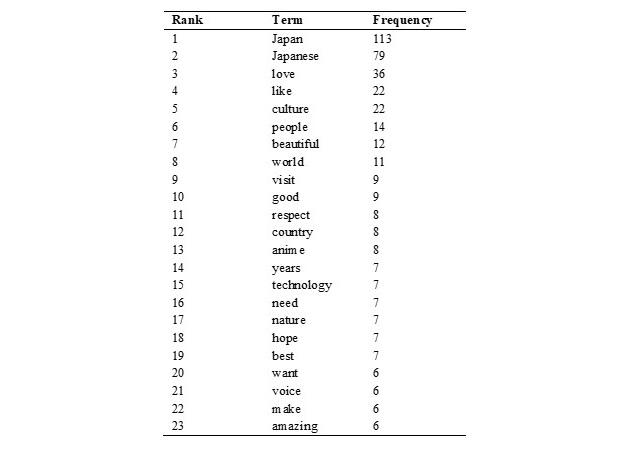
Table 7: High-frequency terms (n=23) grouped by lemma in comments. Compiled by the author.
Next, these comments were manually reviewed and read closely to identify recurrent discursive patterns. Due to the small sample size, collocates and correlations data were not retrieved, as such results would have lacked statistical reliability and risked interpretive distortion.
Finally, the patterns observed in viewer responses were compared with those found in the transcript corpus across three analytical dimensions: (1) lexical overlap between the two datasets; (2) thematic convergence or divergence in content and tone; and (3) representational emphasis, evaluating which aspects of Japan’s self-image were reinforced, reimagined, or overlooked by international audiences. This stage also allowed for the identification of three emergent themes present in the comment corpus but absent from the transcript corpus, capturing additional dimensions of audience perception beyond MOFA’s projected themes.
Japan’s Projected Selfie (RQ1 Findings)
Five recurring themes that construct Japan’s selfie emerged from thematic analysis, as summarised in Table 8. These are identified through high-frequency terms, collocates, and correlations (Tables 3, 4, and 5), as well as close reading of the transcripts.
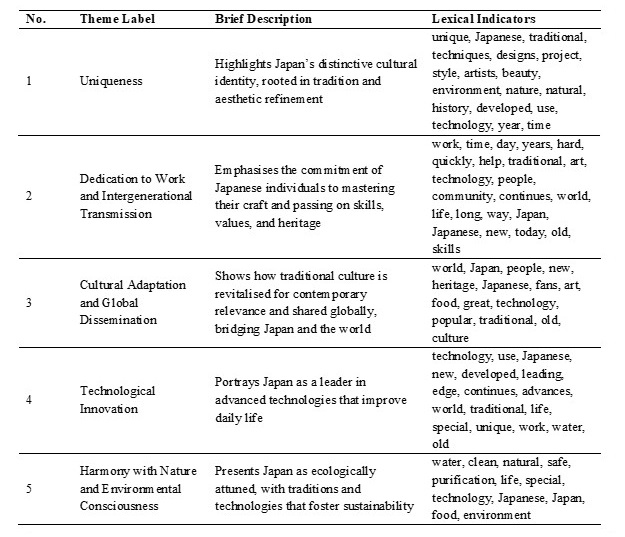
Table 8: Summary of key themes identified in JVTen video transcripts (RQ1). Compiled by the author.
The first theme, Uniqueness, appears in seventy-seven videos. It is conveyed through evocative language, often beginning with depictions of washoku (traditional Japanese cuisine). Renowned for its subtle flavours, distinctive ingredients, and specialised preparation techniques, washoku is presented as emblematic of Japanese culture, with dining experiences underscoring the singularity of its culinary heritage. The taste and texture of Japan’s regional, seasonal, and health-conscious ingredients are attributed to its distinctive natural environment, which is also portrayed as foundational to its traditional arts and crafts. Beyond cuisine, the videos highlight architecture, theatre, dance, pop culture, technologies, everyday objects, martial arts, and sports, all contributing to a unique cultural identity.
A second recurring theme, present in sixty-three videos, is Dedication to Work and Intergenerational Transmission. Japanese artists, artisans, performers, scientists, and communities are shown as devoted to their work and to the transmission of cultural knowledge across generations. Whether showcasing crafts in paper, ceramics, glass, and textiles; food artistry; festivals and performances; scientific innovation; or environmental stewardship, these practices are depicted as grounded in rigorous training, labour-intensive effort, and a pursuit of excellence. Interviewees express a strong commitment to refining their skills and perfecting their craft, often framing their work as a lifelong vocation intertwined with a deep pride in heritage. Through crafts, local customs, and celebrations, individuals and communities preserve traditions and ensure their continuity.
The third theme, evident in fifty-eight videos, is Cultural Adaptation and Global Dissemination. Cultural preservation is portrayed as dynamic and responsive, with individuals and communities revitalising practices under pressure from modernisation and demographic change. This often involves reimagining traditions for contemporary contexts, for example by introducing modern aesthetics into classic designs or integrating advanced technologies with time-honoured practices. Such adaptations not only maintain cultural continuity but also foster what the videos describe as ‘new creativity’. Beyond adaptation, the videos depict how cultural expression, frequently linked to technological innovation, supports Japan’s global outreach. Traditional arts, crafts, musical instruments, theatre, poetry, everyday items, and technologies are shown as gaining international popularity. Several videos highlight growing engagement with Japanese martial arts and the expanding global fanbase for Japanese pop culture. Crucially, this cultural exchange is framed as reciprocal, with Japanese culture evolving through international interaction, which broadens its global resonance.
A fourth theme, featured in fifty-seven videos, is Technological Innovation. Japan is portrayed as a global leader in fields ranging from robotics and artificial intelligence (AI) to sustainable energy and caregiving technologies. Descriptors such as ‘advanced’, ‘cutting-edge’, ‘groundbreaking’, ‘inspiring’, ‘revolutionary’, and ‘life-changing’ reinforce this image. Innovation is presented as both socially beneficial and deeply integrated into daily life, with examples including robotics and AI enhancing human interaction and industrial efficiency, disaster-preparedness systems, eldercare devices, medical advances such as nanotechnologies and regenerative medicine, and eco-friendly solutions to environmental challenges.
The fifth and final theme, appearing in twelve videos, is Harmony with Nature and Environmental Consciousness. It emerges not only in connection with technological innovation but also in portrayals of Japanese people as deeply connected to, and aware of, the natural world. Narratives highlight ancient customs reflecting enduring ties between humans, animals, and the environment; art forms venerating nature’s transient beauty and transformative essence; the coexistence of wildlife and humans, underscoring mutual respect; and sustainable practices developed over generations. Collectively, these elements convey a philosophy rooted in harmony, respect, and conservation, emphasising the interdependence of humans and the environment. This ethos is further expressed through waste reduction, renewable resource use, and eco-conscious design, all of which promote sustainable living.
Overall, these five themes present a multifaceted selfie of Japan that combines long-standing traditions with forward-looking innovation and global outreach. The videos depict a nation anchored in its cultural roots yet actively engaging with the world, a dual orientation that defines its diplomatic self-presentation and provides the baseline for examining how this image is interpreted by audiences (RQ2 and RQ3).
Japan’s Selfie Reception (RQ2 and RQ3 Findings)
The sentiment analysis of JVTen video comments, conducted to assess international audience responses, is summarised in Table 9.

Table 9: Sentiment analysis results for all comments and filtered subsets (RQ2). Compiled by the author.
Across the full dataset, neutral sentiment predominates (48%), followed by positive (37.8%) and negative (14.3%), with positive comments outnumbering negative ones by more than two to one. Set A, which excludes both high-comment videos, records the highest proportion of positive sentiment (46.7%), alongside reduced neutral (40.9%) and negative (12.4%) responses. Set B (Akita Inu only) also shows a relatively high share of positive comments (42%), indicating the affective appeal of the subject, while Set C (Water Power Generator only) closely matches the overall distribution.
While these figures confirm a generally positive reception, especially for emotionally engaging content, they do not reveal the focal points of Japan’s received selfie or how it aligns with or diverges from Japan’s officially promoted self-image. To address this, a comparative thematic analysis of 167 comments was conducted, mapping Japan’s received selfie against the themes of Japan’s projected selfie identified in RQ1, and identifying new areas of emphasis or critique.
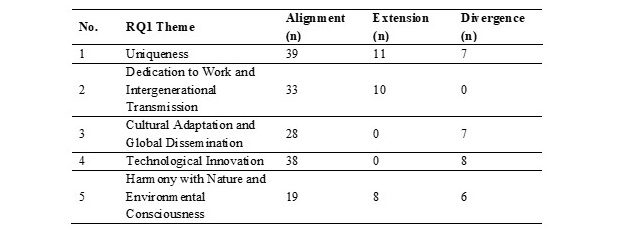
Table 10: Alignment, extension, and divergence between projected (RQ1) and received (RQ3) selfies of Japan. n = number of comments. The total exceeds 167 because some comments were coded into multiple categories when they addressed more than one theme. Representative quotes for each category are discussed in the main text. Compiled by the author.
As Table 10 shows, alignment with the five RQ1 themes is consistently strong. Many comments affirm Japan’s distinctiveness, the excellence of its artisans, cultural adaptation, leadership in technology, and harmony with nature. Illustrative examples include: ‘everything is so unique and not mass produced’ (JVTen, 2019a); ‘The craftsmanship of the Japanese is really amazing!’ (JVTen, 2021a); ‘I believe modernity should never come at the expense of tradition. Both can coexist and Japan is a great example of that’ (JVTen, 2017a); ‘Japanese children becoming clever due to educated man like him passed on his scientific knowledge’ (JVTen, 2019b); ‘Japan has always most advanced technology’ (JVTen, 2019b); and ‘What I love about Japan is their continuous practice of finding ways to incorporate nature into their daily lives’ (JVTen, 2018a), all of which closely mirror the video narratives in RQ1.
Extensions build on these alignments by adding emphases absent or understated in the videos. For Uniqueness, viewers sometimes describe Japan as having an emotional or mystical quality (‘magic place’ [JVTen, 2018b]), or praise its distinctive retail experiences (‘so many mom-and-pop shops in Japan with each having their own unique thing’ [JVTen, 2019a]; ‘Stores like these can only be seen and ever work in Japan’ [JVTen, 2022a]). For Dedication to Work and Intergenerational Transmission, the pursuit of excellence is linked to Japan’s public hygiene (‘Cleanliness is next to Godliness. The Japanese have reached the pinnacle of human civilization’ [JVTen, 2021b]). For Harmony with Nature and Environmental Consciousness, several comments emphasise Japan’s animal welfare practices, particularly towards dogs (‘The way Japanese treat their dogs is truly beautiful’ [JVTen, 2018c]).
Divergences, though less common, form an important counterpoint. Some challenge claims of distinctiveness (‘Not only in Japan!’ [JVTen, 2018c]), criticise the overreliance on pop culture for national representation (‘Japan is just overhyped by Anime. No one knows Japan before 100 years’ [JVTen, 2017a]), or express scepticism about technological originality, nuclear safety, and environmental practices. Examples include: ‘I have actually seen an even smaller turbine used in Thailand. This was 10 years ago. Now it gets into the news because the Japanese have copied it’ (JVTen, 2019b); ‘Can this device work using the Fukushima water? Oh...wait. After almost 9 years... the reactor still active. Nuclear power is better, cheap and kill everything’ (JVTen, 2019b); and ‘Love everything Japanese except whale killing’ (JVTen, 2017a).
These three patterns feed directly into emerging themes that reach beyond the RQ1 framework: the emotional and mystical framing seen in Uniqueness extensions resonates with Affection and Aspirational Desire; the civic values highlighted in Dedication to Work and Intergenerational Transmission extensions are echoed in Social Harmony and Public Conduct; and the scepticism present in divergences connects to Critical Social Commentary. Table 11 summarises these themes, which are identified through analysis of high-frequency terms (Table 7) and close reading of the comments.
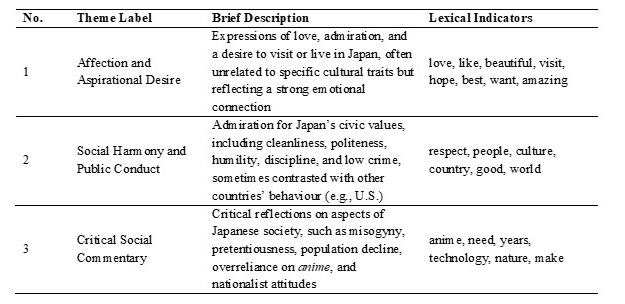
Table 11: Emerging themes in Japan’s received selfie (RQ3). Compiled by the author.
The first theme reflects one of the most frequent audience responses, ranging from brief declarations of love and admiration for Japan (‘I love Japan’ [JVTen, 2019a]; ‘Japan is amazing’ [JVTen, 2022b]; ‘Japan is out of this world’ [JVTen, 2017b]) to long-held desires to visit or even live there, often framed as a ‘dream’ or once-in-a-lifetime goal, and as a place of deep personal meaning, reflecting a broader idealisation of Japan as both a symbol and a tangible aspiration (‘I have to visit Japan at least once before I die!! Such a beautiful country’ [JVTen, 2023]; ‘One of my wildest dreams to come to Japan pls keep that nostalgic store keeps going so one day I come from India to Japan I can visit’ [JVTen, 2022a]).
The second theme celebrates Japan’s civic values, including public orderliness, politeness, humility, discipline, and low crime, often contrasted with perceived shortcomings elsewhere: ‘Cleanliness is next to Godliness’ (JVTen, 2021b); ‘Happiness, yes, but I also saw humility. She was “covering her mouth” - because (as I understand it) the Japanese don’t brag or show ego. They’re team-players, so she hugged her ‘team’. Shared the joy’ (JVTen, 2017a); ‘Even dogs are so disciplined in Japan’ (JVTen, 2018c); and ‘Stores like these can only be seen and ever work in Japan. Thanks to their respect for their culture and low crime rate’ (JVTen, 2022a). This admiration extends the projected themes by highlighting everyday social norms and behaviours.
The third theme expands the scepticism found in divergences to include broader societal concerns such as misogyny (‘Love everything Japanese except […] misogyny’ [JVTen, 2017a]), perceived pretentiousness (‘Pretence is the key trait of the Japanese culture, all the showing bullshit’ [JVTen, 2021c]), demographic decline (‘Why human and dogs are declining in Japan?’ [JVTen, 2018c]), and nationalist attitudes (‘Japanese people are very nationalistic’ [JVTen, 2019b]).
In sum, the reception findings reveal a selfie of Japan that retains much of the projected image while reframing it through audience perspectives. Many of the core RQ1 themes are affirmed, reinforcing the nation’s diplomatic self-presentation, while additional layers, including emotional attachment, civic admiration, and concern for animal welfare, are introduced. Critical perspectives on uniqueness, cultural representation, societal norms, technological originality, and environmental practices further complicate the picture. The three emergent themes synthesise these affirmations and challenges, showing that Japan’s received selfie blends endorsement with reinterpretation, shaped by transnational audiences’ values, experiences, and moral frameworks.
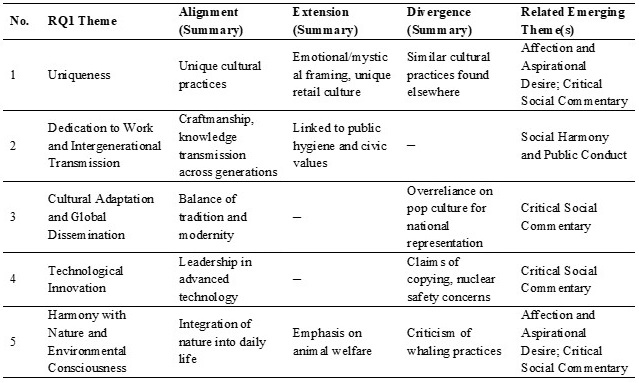
Table 12: Summary of projection-reception alignment, extension, and divergence in Japan’s selfie, with associated emerging themes (RQ1 and RQ3). Compiled by the author.
Discussion and Conclusion
Returning to the theoretical framework introduced earlier, this study examined Japan’s digital self-representation on JVTen through the lens of selfie diplomacy, a concept embedded in the broader transition from old to new PD and the use of SNS by state actors to project a national image and foster two-way engagement. In this context, JVTen constitutes a deliberate effort by MOFA to portray Japan through a curated mix of cultural heritage, innovation, environmental awareness, and global outreach. Although the channel offers some potential for interaction through comments, its emphasis remains on controlled content presentation rather than dialogue, placing it closer to a variant of selfie diplomacy that prioritises thematic coherence and nation brand cultivation over regular online interaction, long-term relationship-building, and responsiveness to unfolding events, as envisioned in Manor’s (2019) ideal model.
The five themes identified in RQ1 reflect long-standing pillars of Japan’s PD (Ogoura, 2009; Nakamura, 2013; Kaneko, 2014; Watanabe, 2017; Ogawa, 2020). These are consistent with self-representational strategies outlined by Manor and Segev (2015) and Manor (2019) that emphasise positive attributes, downplay shortcomings, and highlight conformity with international standards. JVTen deploys MOFA’s soft power assets as interconnected elements of a coherent national selfie, striving to balance tradition and modernity. This duality mirrors Japan’s broader PD strategy, reinforcing its image as both a guardian of heritage and a leader in innovation (Nakamura, 2013).
Viewer responses addressed in RQ2 reveal strong affective engagement, with positive sentiment exceeding negative sentiment by more than two to one. Yet positive sentiment alone does not necessarily translate into high interaction: as of 7 November 2024, 15,661,190 views had generated only 7,474 comments (Table 1), an interaction rate of just 0.05%, pointing to limited audience participation overall. When examined thematically in RQ3, this affective response shows that audience perceptions can align with, extend upon, or diverge from Japan’s projected selfie.
The comparative thematic analysis in RQ3 demonstrates substantial alignment between Japan’s projected and received selfies, with many comments echoing the five themes identified in RQ1 and reinforcing MOFA’s messaging. The affective and normative responses extending this alignment is reflected in the emergent themes of Affection and Aspirational Desire and Social Harmony and Public Conduct. These suggest that JVTen’s projected selfie resonates with international audiences’ pre-existing ideals and perceptions of Japan, often idealising the country in aspirational or moral terms. This implies that the projected selfie not only informs but also inspires. However, divergences expose credibility constraints, a limitation noted by Manor (2019) in his theorisation of selfie diplomacy, arising when the projected selfie conflicts with audience perceptions of the country. Such critiques risk eroding reputation and underscore the need for responsiveness and narrative adaptation, something MOFA appears not to prioritise.
By situating Japan’s case within selfie diplomacy theory, this study extends the framework to a non-Western context, illustrating what may be termed a ‘continuity-oriented model’, here defined as one that maintains thematic coherence and nation brand stability over time, grounded in long-standing pillars of a country’s PD, instead of event-driven, crisis-responsive, or more generally reactive models, as most empirical studies have examined in Western settings (Manor and Segev, 2015; Manor, 2017; 2019; Ventura, 2024; Kacziba, Gibárti, and Lechner, 2025). While this approach embodies Japan’s broader PD strategy of privileging long-term image cultivation over rapid, interactive engagement, it may limit adaptability to shifting global narratives, an increasingly critical factor in digital diplomacy (Manor, 2019). Therefore, for MOFA, incorporating content that addresses unfolding issues or directly engaging with viewers could enhance credibility and deepen audience relationships without compromising narrative coherence.
As with any case study, these conclusions must be considered in light of certain limitations. To begin with, the analysis focuses solely on one platform, YouTube, and one channel, JVTen, offering only a partial view of Japan’s digital PD ecosystem. Second, the thematic analysis examined textual transcripts of the videos, excluding audiovisual elements such as tone of voice, music, visuals, and editing style that may influence audience perceptions. Third, the comment-based sentiment analysis captures a small subset of viewers with possible linguistic and cultural biases. Fourth, the dataset covers a single period, providing a temporal snapshot rather than a longitudinal perspective. Finally, the continuity-oriented model is inferred from observable patterns without access to MOFA’s internal planning processes, meaning it remains an interpretation rather than a confirmed strategy.
Acknowledging these limitations opens up several promising directions for future research. Expanding the scope to include additional platforms and accounts could provide a more comprehensive picture of Japan’s digital PD ecosystem. Multimodal analyses incorporating both verbal and non-verbal elements of digital content could offer deeper insight into the interplay of narrative, visual, and auditory cues in shaping foreign publics’ perceptions. Widening sentiment analysis to a larger and more linguistically diverse set of audience responses could account for cultural and language variation. Longitudinal studies could assess the durability of cultural continuity strategies during times of crisis or reputational strain. Finally, research drawing on interviews or internal documents could clarify MOFA’s decision-making process, providing direct evidence for or against the continuity-oriented model proposed here, while comparative studies could examine whether other states also employ a continuity-oriented approach to selfie diplomacy and how such strategies differ in content and audience reception, thereby contributing to a broader understanding of digital diplomacy practices worldwide.
Note
1. The information in this paragraph was gathered by the author through an analysis of archived versions (2004–2014) of the website http://web-japan.org/jvt/index.html, accessible via https://web.archive.org/web/20040715000000*/http://web-japan.org/jvt/index.html (accessed 1 August, 2024).
References
Aoi, C. (2017) ‘Japanese strategic communication: its significance as a political tool’, Defence Strategic Communications, 3(1), pp. 71–101. Available at: https://doi.org/10.30966/2018.RIGA.3.3
Barbieri, F. et al. (2020) ‘TweetEval: unified benchmark and comparative evaluation for tweet classification’, Findings of the Association for Computational Linguistics: EMNLP 2020, pp. 1644–1650. Available at: https://doi.org/10.18653/v1/2020.findings-emnlp.148
Bjola, C. (2015) ‘Introduction: making sense of digital diplomacy’, in C. Bjola and M. Holmes (eds.) Digital diplomacy: theory and practice. London & New York: Routledge, pp. 1–9. Available at: https://doi.org/10.4324/9781315730844
Bjola, C. and Jiang, L. (2015) ‘Social media and public diplomacy: a comparative analysis of the digital diplomatic strategies of the EU, US, and Japan in China’, in C. Bjola and M. Holmes (eds.) Digital diplomacy: theory and practice. London & New York: Routledge, pp. 71–88. Available at: https://doi.org/10.4324/9781315730844
Council on the Promotion of Cultural Diplomacy (2005) Establishing Japan as a ‘peaceful nation of cultural exchange’. Available at: https://japan.kantei.go.jp/policy/bunka/050711bunka_e.html (Accessed 22 July 2025).
Cull, N. J. (2009) ‘Public diplomacy before Gullion: the evolution of a phrase’, in N. Snow and P. M. Taylor (eds.) Routledge handbook of public diplomacy. New York & Oxon: Routledge, pp. 19–23. Available at: https://doi.org/10.4324/9780203891520-10
Fan, Y. (2010) ‘Branding the nation: towards a better understanding’, Place Branding and Public Diplomacy, 6(2), pp. 97–103. Available at: https://doi.org/10.1057/pb.2010.16
Fitzpatrick, K. R. (2011) U.S. public diplomacy in a post-9/11 world: from messaging to mutuality. Los Angeles: Figueroa Press.
Hanson, F. (2010) A digital DFAT: joining the 21st century [policy brief]. Sydney: Lowy Institute for International Policy. Available at: https://www.files.ethz.ch/isn/124574/A_digital_DFAT.pdf
Holmes, M. (2015) ‘Digital diplomacy and international change management’, in C. Bjola and M. Holmes (eds.) Digital diplomacy: theory and practice. London & New York: Routledge, pp. 13–32. Available at: https://doi.org/10.4324/9781315730844
Japan Video Topics—Archives [JVTa] (no date) Japan Video Topics—Archives [YouTube channel]. Available at: https://www.youtube.com/@JVT-Archives (Accessed 31 December 2024).
Japan Video Topics—English [JVTen] (no date) Japan Video Topics—English [YouTube channel]. Available at: https://www.youtube.com/@JVTen (Accessed 7 November 2024).
——— (2017a) Women horseback archers compete in Yabusame [video]. Available at: https://youtu.be/DDDvSRCVq_g?si=W2UDH1z5V7Ovbexb (Accessed 7 November 2024). Comment posted on video by user.
——— (2017b) Flood control from underground [video]. Available at: https://youtu.be/CsPxjRobjpk?si=CjE1jvJnTjE_fn-e (Accessed 7 November 2024). Comment posted on video by user.
——— (2018a) Clean energy in snowy Niseko [video]. Available at: https://youtu.be/QCTrT2cm_yw?si=u3J5QXPrFFi4HaWj (Accessed 7 November 2024). Comment posted on video by user.
——— (2018b) Niijima glass—Bright future for a small island [video]. Available at: https://youtu.be/iAIX9IZq9do?si=QX1nxIvRbEgsQ9EC (Accessed 7 November 2024). Comment posted on video by user.
——— (2018c) Japan’s most faithful dogs the Akita inu [video]. Available at: https://youtu.be/ZMVXP2NGhGw?si=FhwLyqF-A6vwwNtf (Accessed 7 November 2024). Comment posted on video by user.
——— (2019a) Ekiben boxed lunches for train travel [video]. Available at: https://youtu.be/8YXdeIDNiRE?si=qroGENBPgO1BXPWK (Accessed 7 November 2024). Comment posted on video by user.
——— (2019b) Ultra-small water power generator [video]. Available at: https://youtu.be/XjEgFlngZ04?si=jQox8q2zeD93GqsR (Accessed 7 November 2024). Comment posted on video by user.
——— (2021a) Edo kiriko—Japanese style cut glass [video]. Available at: https://youtu.be/Qjcy9b1gKAg?si=nedFb09QexUm0mSH (Accessed 7 November 2024). Comment posted on video by user.
——— (2021b) Japanese style hospitality—Cleanliness is key [video]. Available at: https://youtu.be/1vGtQDQlRuc?si=L0bOf89gEg-lzwcA (Accessed 7 November 2024). Comment posted on video by user.
——— (2021c) Kyudo—The way of the bow [video]. Available at: https://youtu.be/pT0XczNY9TU?si=yFP5VrOdYxzECt8a (Accessed 7 November 2024). Comment posted on video by user.
——— (2022a) Dagashi-ya—Japan’s old-style snack stores [video]. Available at: https://youtu.be/T2solDVJVRU?si=7Vt5ecrI2oauo858 (Accessed 7 November 2024). Comment posted on video by user.
——— (2022b) Japan’s concept café trend [video]. Available at: https://youtu.be/Ibm1ri6Y4_w?si=w_dN2_5jN_MzLXFY (Accessed 7 November 2024). Comment posted on video by user.
——— (2023) The deer of Nara park [video]. Available at: https://youtu.be/TLnWYuGIg1A?si=yCOCL5hOkJK1zj8f (Accessed 7 November 2024). Comment posted on video by user.
Kacziba, P., Gibárti, S. and Lechner, Z. (2025) ‘Assessing Greece’s transition to digital diplomacy: insights from Twitter/X (2021–2022)’, Southeast European and Black Sea Studies, pp. 1–32. Available at: https://doi.org/10.1080/14683857.2025.2457813
Kaneko, M. (2014) ‘Nihon no paburikku dipuromashī no zentaizō’ [A comprehensive overview of Japan’s public diplomacy], in M. Kaneko and M. Kitano (eds.) Paburikku dipuromashī senryaku: Imēji o tatakau kokkakan gēmu ni ikani shōri suru ka [Public diplomacy strategy: how to win the inter-State game over image]. Tokyo: PHP Kenkyūjo [PHP Institute], pp. 186–226.
Lee, K. K. and Shahin, S. (2023) ‘Reciprocity and asymmetry in digital diplomacy: geopolitics of national identity in South Korea-Japan and South Korea-US relations’, Policy Internet, 15, pp. 415–430. Available at: https://doi.org/10.1002/poi3.355
Manor, I. (2017) ‘America’s selfie—Three years later’, Place Branding and Public Diplomacy, 13, pp. 308–324. Available at: https://doi.org/10.1057/s41254-017-0060-z
——— (2019) The digitalization of public diplomacy. Cham: Palgrave Macmillan. Available at: https://doi.org/10.1007/978-3-030-04405-3
Manor, I. and Segev, E. (2015) ‘How the US portrays itself on its social media accounts’, in C. Bjola and M. Holmes (eds.) Digital diplomacy: theory and practice. London & New York: Routledge, pp. 89–108. Available at: https://doi.org/10.4324/9781315730844
Mäntylä, M. V., Graziotin, D. and Kuutila, M. (2018) ‘The evolution of sentiment analysis—A review of research topics, venues, and top cited papers’, Computer Science Review, 27, pp. 16–32. Available at: https://doi.org/10.1016/j.cosrev.2017.10.002
Matsumura, M. (2002) Kokusai kōryūshi: Kingendai Nihon no kōhō bunka gaikō to minkan kōryū [The history of international exchange: public relations, cultural diplomacy, and people-to-people exchange in modern and contemporary Japan]. Tokyo: Chijinkan.
Melissen, J. (2005) ‘The new public diplomacy: between theory and practice’, in J. Melissen (ed.) The new public diplomacy: soft power in international relations. New York: Palgrave Macmillan, pp. 3–27. Available at: https://doi.org/10.1057/9780230554931_1
Mikami, T. (2007) ‘Paburikku dipuromashī kenkyū no shatei’ [The scope of public diplomacy research], Shūdō Hōgaku [departmental bulletin paper, Hiroshima Shūdō University], 28(2), pp. 246–225. Available at: https://shudo-u.repo.nii.ac.jp/record/1354/files/KJ00004592742.pdf
Ministry of Foreign Affairs of Japan [MOFA] (1997) Diplomatic bluebook 1997. Tokyo: Ministry of Foreign Affairs. Available at: https://www.mofa.go.jp/policy/other/bluebook/1997/IV.html#B
——— (2001) Diplomatic bluebook 2001. Tokyo: Ministry of Foreign Affairs. Available at: https://www.mofa.go.jp/policy/other/bluebook/2001/chap2-5-b.html
——— (2002) Diplomatic bluebook 2002. Tokyo: Ministry of Foreign Affairs. Available at: https://www.mofa.go.jp/policy/other/bluebook/2002/chap4-b.pdf
——— (2004) Diplomatic bluebook 2004. Tokyo: Ministry of Foreign Affairs. Available at: https://www.mofa.go.jp/policy/other/bluebook/2004/chap3-e.pdf
——— (2005) Diplomatic bluebook 2005. Tokyo: Ministry of Foreign Affairs. Available at: https://www.mofa.go.jp/policy/other/bluebook/2005/ch3-e.pdf
——— (2013) Diplomatic bluebook 2013. Tokyo: Ministry of Foreign Affairs. Available at: https://www.mofa.go.jp/files/000019042.pdf
——— (2015) Diplomatic bluebook 2015. Tokyo: Ministry of Foreign Affairs. Available at: https://www.mofa.go.jp/files/000106463.pdf
——— (2019) Diplomatic bluebook 2019. Tokyo: Ministry of Foreign Affairs. Available at: https://www.mofa.go.jp/files/000527162.pdf
——— (2024) Diplomatic bluebook 2024. Tokyo: Ministry of Foreign Affairs. Available at: https://www.mofa.go.jp/policy/other/bluebook/2024/pdf/pdfs/2024_all.pdf
——— (2025) Social media list (Ministry of Foreign Affairs). Available at: https://www.mofa.go.jp/about/list_en.html (Accessed 23 July 2025).
Nakamura, T. (2013) ‘Japan’s new public diplomacy: coolness in foreign policy objectives’, Media to Shakai [Media and Society], 5, pp. 1–23. Available at: https://www.lang.nagoya-u.ac.jp/media/public/mediasociety/vol5/pdf/nakamura.pdf
Nishikawa, J. (2022) ‘Comparative analysis of the operation of social media channels by 156 foreign embassies in Japan: focusing on the use of Twitter and Facebook accounts in communication with Japan’, Journal of Socio-Informatics, 15(1), pp. 15–32. Available at: https://www.jstage.jst.go.jp/article/jsi/15/1/15_15/_pdf/-char/ja
Nishikawa, J. and Ogawa, T. (2024) ‘Public diplomacy research in Japanese language: a systematic review of patterns and trends in academic literature from 2001 to 2022’, Journal of Public Diplomacy, 4(1), pp. 156–183. Available at: https://doi.org/10.23045/jpd.2024.4.1.009
Nye, J. (2004) Soft power: the means to succeed in world politics. New York: Public Affairs.
Ogawa, T. (2020) ‘Japan’s public diplomacy at the crossroads’, in N. Snow and N. J. Cull (eds.) Routledge handbook of public diplomacy. New York & London: Routledge, pp. 273–283. Available at: https://doi.org/10.4324/9780429465543-33
——— (2022) ‘2010-nendai Nihon no paburikku dipuromashī: Neoriberarizumu to “senryakuteki taigai hasshin” e no keisha’ [Public diplomacy of Japan in the 2010s: the turn toward Neoliberalism and ‘strategic external communication’], Atomi Gakuen Joshi Daigaku Jinbungaku Fōramu [Atomi University Humanities Forum], 20, pp. 170–157. Available at: https://atomi.repo.nii.ac.jp/record/4005/files/atomi_jinbun20_11.pdf
Ogoura, K. (2009) Japan’s cultural diplomacy. Tokyo: The Japan Foundation.
Pamment, J. (2013) New public diplomacy in the 21st century: a comparative study of policy and practice. Oxon & New York: Routledge.
Park, S., Chung, D. and Park, H. W. (2019) ‘Analytical framework for evaluating digital diplomacy using network analysis and topic modelling: comparing South Korea and Japan’, Information Processing & Management, 56(4), pp. 1468–1483. Available at: https://doi.org/10.1016/j.ipm.2018.10.021
Sevin, E., Metzgar, E. T. and Hayden, C. (2019) ‘The scholarship of public diplomacy: analysis of a growing field’, International Journal of Communication, 13, pp. 4814–4837. Available at: https://ijoc.org/index.php/ijoc/article/view/10020/2813
Snow, N. (2022) A reliable friend and strategic partner in the Indo-Pacific region: Japan’s strategic communications and public diplomacy [institutional report]. Tokyo: International Security Industry Council of Japan. Available at: https://isic-japan.org/wp-content/uploads/2023/08/Japans-Strategic-Communications-by-Nancy-Snow.pdf
Sotiriu, S. (2015) ‘Digital diplomacy: between promises and reality’, in C. Bjola and M. Holmes (eds.) Digital diplomacy: theory and practice. London & New York: Routledge, pp. 33–51. Available at: https://doi.org/10.4324/9781315730844
Szondi, G. (2008) Public diplomacy and nation branding: conceptual similarities and differences [discussion paper]. The Hague: Netherlands Institute of International Relations ‘Clingendael’. Available at: https://www.clingendael.org/sites/default/files/pdfs/20081022_pap_in_dip_nation_branding.pdf
Ueda, M. (2021) ‘Tagenteki nettowāku toshite no paburikku dipuromashī: kaikoku kara dejitaru jidai made’ [Networked international relations: Japanese public diplomacy from the Meiji restoration to the digital era], Hōgaku Kenkyū: Hōritsu, Seiji, Shakai [Journal of law, politics, and sociology], 94(2), pp. 187–218. Available at: https://koara.lib.keio.ac.jp/xoonips/modules/xoonips/download.php/AN00224504-20210228-0187.pdf?file_id=162282
Ventura, S. (2024) ‘War and its imagery: the visual narrative of the Ukrainian State’s Instagram account Ukraine.Ua as a tool of digital public diplomacy’, International Journal of Strategic Communication, 19(3), pp. 379–403. Available at: https://doi.org/10.1080/1553118X.2024.2395407
Watanabe, Y. (2017) ‘The pivot shift of Japan’s public diplomacy’, in N. Chitty, L. Ji, G. D. Rawnsley and C. Hayden (eds.) The Routledge handbook of soft power. London & New York: Routledge, pp. 400–413. Available at: https://doi.org/10.4324/9781315671185-44
Web Japan (no date) Japan Video Topics. Available at: https://web.archive.org/web/20040715000000*/http://web-japan.org/jvt/index.html (Accessed 1 August 2024).
Article copyright Raffaella Marini.




The electronic journal of contemporary japanese studies was founded on 9 January 2001.
Page created 23 April 2026, last modified 23 April 2026.
Email the webmaster if you have any problems.
Copyright electronic journal of contemporary japanese studies.


