Rebuilding Memory: Sukagawa, Ultraman, and Cultural Heritage in Post-Disaster Japan
Volume 25, Issue 2 (Article 5 in 2025). First published in ejcjs on 18 August 2025.
Abstract
This article examines the integration of cultural narratives in Sukagawa City’s reconstruction following the 2011 Great East Japan Earthquake. It explores the city’s partnership with Nebula M78, the fictional homeland of Ultraman, as a case of memory-making and urban revitalisation. Leveraging its ties to special effects legend Tsuburaya Eiji, Sukagawa creates a hybrid space where fiction and reality intersect. Through archival records, documentary footage, and cultural theory—including hare, ke, and kegare—this study situates Sukagawa’s efforts within Japan’s broader post-disaster recovery. It argues that the city’s transformation into the ‘M78 Land of Light’ serves not only as a tourism strategy but also as a mechanism for resilience and historical preservation. By positioning Ultraman as a symbolic protector and integrating fictional world-building into heritage practices, Sukagawa constructs an enduring site of memory that redefines cultural identity in the wake of crisis.
Keywords: Cultural Memory; Post-Disaster Recovery; Ultraman; Sukagawa City; Imagined Communities; Hare, Ke, Kegare.
Introduction: Sukagawa’s Reconstruction after 3.11
The Great East Japan Earthquake of 11 March 2011 devastated Sukagawa City in Japan’s Tōhoku region, destroying critical infrastructure, such as the Fujinuma Dam, and exacerbating pre-existing economic vulnerabilities tied to farming and fishing (Sukagawa City, 2013a; Fukushima Rural Infrastructure Development Division, 2022; Kelly, 2012). Beyond physical destruction, the disaster fractured communities, necessitating a recovery that restored both infrastructure and cultural identity. This article argues that Sukagawa City, by integrating the Ultraman narrative into its post-3.11 reconstruction, transforms cultural heritage into a dynamic tool for communal revitalisation, economic recovery, and identity reconstruction. Through the symbolic ‘Sukagawa City M78 Land of Light,’ Ultraman serves as a guardian figure that fosters resilience, strengthens imagined communities, and redefines Sukagawa’s cultural landscape in the wake of crisis.
Sukagawa’s approach aligns with broader post-3.11 discourses of Ganbarō Nippon (“United We Stand”) and Kizuna (“Social Bonds”), which emphasise human-centred recovery (Gagné, 2020). Drawing on Namihira’s (1976) framework of hare (sacred moments), ke (everyday life), and kegare (liminal impurity), this study analyses how Sukagawa’s Ultraman initiatives transform post-disaster disruption (kegare) into communal renewal (hare). Additionally, it examines community-centred programs such as the Sukagawa Tokusatsu Juku, where young people learn special effects production, develop creative skills, and build friendships through collaborative making. It also employs Poulios’ (2014) living heritage approach, which prioritises community participation in cultural preservation, to frame Sukagawa’s efforts as a model for sustainable recovery. By blending archival records, documentary footage, and cultural theory, this article demonstrates how Sukagawa leverages its connection to Tsuburaya Eiji, the Ultraman creator, to create a hybrid space where fiction and reality intersect.
In 2013, Sukagawa formalised a cultural partnership with Nebula M78, Ultraman’s fictional homeland, establishing the ‘Sukagawa City M78 Land of Light’ (Tsuburaya Productions, 2013). This initiative, alongside the 2019 opening of the Sukagawa Civic Exchange Center (tette), which houses the Eiji Tsuburaya Museum, embeds Ultraman into the city’s physical and social fabric (Sukagawa Civic Exchange Center, 2023). These efforts are complemented by grassroots creative practices—particularly the re-signification of everyday materials through bricolage in the Tokusatsu Juku—demonstrating how heritage can be reimagined as both education and social connection. Documented in city-produced films (Sukagawa City Official Channel, 2020a), these initiatives highlight how cultural spaces foster social rehabilitation beyond mere reconstruction.
This article unfolds in four sections. First, it contextualises Sukagawa’s post-3.11 challenges and its partnership with the fictional Nebula M78. Second, it analyses Ultraman’s mythic structure through hare, ke, and kegare, linking it to Japanese folklore resilience narratives. Third, it examines Sukagawa’s Ultraman-themed initiatives—virtual residency, the Eiji Tsuburaya Museum, the Tokusatsu Juku workshops in the Sukagawa Tokusatsu Archive Center, and other festival integrations—as mechanisms for memory-making and economic revitalisation. Finally, it situates Sukagawa’s efforts within global disaster recovery frameworks, comparing them to other post-disaster communities. By exploring these dimensions, this study reveals how Sukagawa’s innovative use of popular culture not only rebuilds a city but also reimagines its cultural identity for a resilient future.
Ultraman’s Cultural Significance in Post-Disaster Resilience
To understand how Sukagawa City leverages Ultraman for post-3.11 recovery, this section explores the cultural and narrative significance of the Ultraman series, rooted in Tsuburaya Eiji’s vision and its alignment with Japanese folk concepts of hare (sacred moments), ke (everyday life), and kegare (liminal impurity). By framing Ultraman’s battles as ritualistic acts of purification and renewal, this analysis reveals why the series resonates with Japan’s resilience narratives and Sukagawa’s cultural revitalisation.
Tsuburaya Eiji, a pioneering special effects director, shaped Japan’s visual culture through films like Godzilla (1954), which used diegetic media to depict destruction as a public spectacle[1] (Kamiya, 2021). Inspired by avant-garde works like Ballet Mécanique (1924), Tsuburaya deconstructed conventional storytelling, blending realism with fantasy (Kamiya, 2021). In 1966, he founded Tsuburaya Productions, launching Ultra Q and Ultraman, the latter becoming a cultural phenomenon[2]. In Ultraman (1966), the Science Special Search Party (SSSP) confronts disasters caused by aliens and monsters (kaijū). Their ally, Ultraman, a warrior from the M78 Nebula’s Land of Light, merges with human Shin Hayata to defend Earth, transforming into a giant to battle threats (Shōgakukan, 1984).
Ultraman’s narrative follows a cycle: a kaijū disrupts society, the SSSP responds, Ultraman intervenes, and peace is restored. This structure mirrors Japan’s post-disaster recovery, where crises are met with collective action and renewal. Tsuburaya’s vision, blending documentary-like realism with mythic heroism, makes Ultraman a fitting symbol for Sukagawa’s reconstruction.
Ultraman’s narrative resonates with Japanese folk concepts of hare (sacred moments), ke (everyday life), and kegare (liminal impurity), which illuminate its role in Sukagawa’s post-3.11 recovery (Namihira, 1976). In the series, ke is depicted through the Science Special Search Party’s routine investigations of daily life. Kegare emerges with kaijū attacks, symbolising disruptions like the 2011 earthquake and tsunami that devastated Sukagawa. Ultraman’s transformation into a giant to battle these threats marks a hare moment—a ritualistic act restoring balance (Kawasaki, 2000, p.124). Namihira (1976, p.353) argues that kegare holds transformative energy, which rituals can redirect into renewal, as seen when drowned bodies, traditionally impure, are enshrined as Ebisu, a deity of prosperity (Sakurai, 1992, p.50).
This duality is why rituals of purification are necessary, acting “as a means to overcome such crises and safely transition to the next stage” (Namihira, 1976, p.353). Similarly, Ultraman subdues kaijū—often born from environmental or scientific imbalances—in battles resembling tamafuri (soul-invoking rites) (Imada, 2023, p.87). Giant monsters (kaijū) can be interpreted as manifestations of pollution, imbalance, or supernatural disturbances—especially since many originate from scientific accidents, environmental destruction, or ancient curses. Nakazawa (2022) further emphasises that kaijū are not inherently evil, which is why Ultraman does not necessarily fight to eliminate them. Instead, his battles “resemble rituals, even professional wrestling matches meant to subdue rather than annihilate” (Nakazawa, 2022, p.42).
This hare-ke-kegare cycle mirrors Sukagawa’s recovery. The 2011 disaster introduced kegare through destruction, while Ultraman-themed initiatives, like the ‘M78 Land of Light’ partnership, serve as hare moments, fostering communal renewal through cultural engagement. Unlike traditional giants symbolising oppressive power, Ultraman embodies a benevolent protector, aligning with Sukagawa’s use of the character to unify citizens in rebuilding efforts (Nakazawa, 2022, p.42). By embedding this narrative framework, Sukagawa transforms post-disaster kegare into a source of resilience, making Ultraman a potent symbol for cultural and social revitalisation.
Ultraman’s themes of protection and renewal resonate beyond Japan, paralleling global superhero narratives like Superman, whose civic interventions maintain order in localised crises (Eco, 1972, p.22). Like Ultraman, Superman resolves immediate threats, leaving reconstruction to communities, mirroring real-world disaster recovery dynamics. In Japan, Ultraman’s battles reflect post-3.11 reliance on emergency responders and community efforts, transforming disaster’s kegare (impurity) into hope (Namihira, 1976). The series’ depiction of rebuilt cities echoes Sukagawa’s resilience, where initiatives like the Eiji Tsuburaya Museum leverage Ultraman’s mythic structure for renewal (Sakurai, 1992). As a benevolent protector, Ultraman subverts oppressive giant archetypes, aligning with Sukagawa’s use of the character to unify citizens (Nakazawa, 2022). By embedding this narrative, Sukagawa taps into a universal heroism archetype, making its recovery locally rooted yet globally relevant. This cultural framework underpins Sukagawa’s innovative use of Ultraman in post-disaster revitalisation strategies, alongside local communities.
Curating Cultural Resilience: Festivals, Urban Change, and the Heritage of Recovery
Sukagawa’s post-3.11 recovery leverages Ultraman to forge a resilient cultural identity, transforming disaster’s kegare (impurity) into communal renewal through pop culture and heritage initiatives. This section examines how the ‘M78 Land of Light’ partnership, Taimatsu Akashi festival, and urban transformations embody the hare-ke-kegare cycle, fostering memory-making and economic revitalisation. By situating these efforts within Fukushima’s broader struggle for renewal and global post-disaster recovery frameworks, Sukagawa’s initiatives illuminate a path from devastation to hope, redefining cultural heritage as a dynamic force for community resilience.
In 2011, Tsuburaya Productions president Ōoka Shinichi visited Fukushima’s affected cities, including Sukagawa—Tsuburaya Eiji’s hometown (Fields Corporation, 2016). This inspired a sister-city partnership with the fictional ‘M78 Nebula, Land of Light,’ formalised on 5 May 2013 at Sukagawa’s Peony Garden. Mayor Hashimoto Katsuya called it “unlike any other, connecting us to the stars,” rooted in Tsuburaya’s legacy (Sukagawa, 2013b, para.2). As part of this partnership, the city launched the Sukagawa City M78 Land of Light—a virtual municipality that, since 19 July 2013, has attracted 27,635 registered residents via its Website (as of 29 January 2025). Individuals who join receive a digital certificate; for example, as a registered resident, I hold documentation indicating an address in the Hikari Taimatsu District—Block 22, Lot 3, 3-3113. Additionally, physical resident cards can be obtained at designated issuing points within Sukagawa, enabling members of the virtual city further to affirm their participation in this symbolic community.
The downloadable materials offered upon registration—including a Residents’ Guide, an Ultra Characters Translation Table, and a pamphlet narrating Eiji Tsuburaya’s life—serve as affective and symbolic tools of civic participation within a reconstructed cultural landscape. Far from mere promotional content, these materials function as ritualised artifacts, conferring a sense of belonging to an imagined community rooted in both real and fictional geographies. By assigning participants a symbolic address within districts such as the Hikari Taimatsu District—named after the city’s traditional Taimatsu Akashi fire festival—Sukagawa invites both locals and fans to inhabit a space of collective memory and mythologised renewal. This performative registration practice transforms the city’s traumatic landscape into a narrative environment, aligning with the hare–ke–kegare cycle by reconfiguring the disruption (kegare) of the 3.11 disaster into a purified, celebratory order (hare) through pop cultural engagement and virtual civic rites.
Sukagawa’s efforts resonate with Fukushima’s broader recovery, where the region grapples with enduring kegare—evidenced by the Fukushima Daiichi decommissioning, projected to 2051, and the displacement of 26,000 evacuees as of May 2024 (New Fukushima Revitalisation Promotion Headquarters, 2024). The release of ALPS-treated water, deemed safe by the IAEA (2024) yet shadowed by ecological concerns (Zhou, 2024; Suzuki, 2023), underscores this regional challenge, which Sukagawa’s symbolic purifications, through Ultraman’s protective ethos, seek to transcend. This digital initiative mirrors Christchurch’s post-2010–12 earthquake recovery in New Zealand, where “a host of creative projects emerged within the gaps left periodically through the stages of demolition and rebuild” (Boswell et al., 2024, p.221). While Christchurch’s Greening the Rubble created physical gardens, its Website and social media fostered virtual belonging—akin to Sukagawa’s digital hare space purifying kegare (Namihira, 1976; Anderson, 2006).
Preserving memory anchors Fukushima’s renewal, with the 3.11 Memorial Network, founded in Ishinomaki, weaving stories across Iwate, Miyagi, and Fukushima, drawing 1.15 million visitors to memorial sites in 2022 (Higashi Nihon Daishinsai, 2023). Operating with the aim of “connecting through 3.11 to move forward for the future,” the network brings together a wide range of facilities, such as the Kadonowaki Elementary School ruins in Ishinomaki and the Takano Kaikan in Kesennuma, which preserve tsunami-damaged remnants and center survivor testimonies through guided tours and educational programs.[3] These ‘museums of themselves’ (Littlejohn, 2020) represent a distinctive mode of disaster heritage, where affected communities take on the role of curators—shaping narratives of trauma and resilience from within. By preserving damaged architecture and integrating personal accounts into the visitor experience, these sites function not as neutral spaces of memory, but as actively constructed platforms for witnessing, healing, and learning. In these self-reflexive landscapes, memory is not only preserved but ritualised and mobilised—blending pedagogy, tourism, and civic mourning. They foster intergenerational learning about disaster prevention and recovery, transforming the kegare of 3.11’s devastation into hare moments of collective remembrance—much like Sukagawa’s Taimatsu Akashi, which ritualises communal healing through its blazing torches.
Importantly, Sukagawa’s symbolic reconstruction is not detached from its tangible traditions. The Taimatsu Akashi festival (Fig.1), which inspired the naming of the virtual Hikari Taimatsu District, traces its origins to a fire ritual honoring the spirits of fallen Nikaidō clan warriors after their defeat by Date Masamune. As Shinjō and Ariga (2015, p.479) note, historical records describe the event as “a ritual to pacify these spirits.” Today, this ritual has been revitalised through event tourism, multimedia dissemination, and school-based initiatives. In these programs, local youth—guided by older generations—participate in building the towering ten-metre torches, acquiring not only technical knowledge but also the cultural and spiritual meaning of the practice. These intergenerational efforts ensure the festival remains a living tradition rather than a static performance.
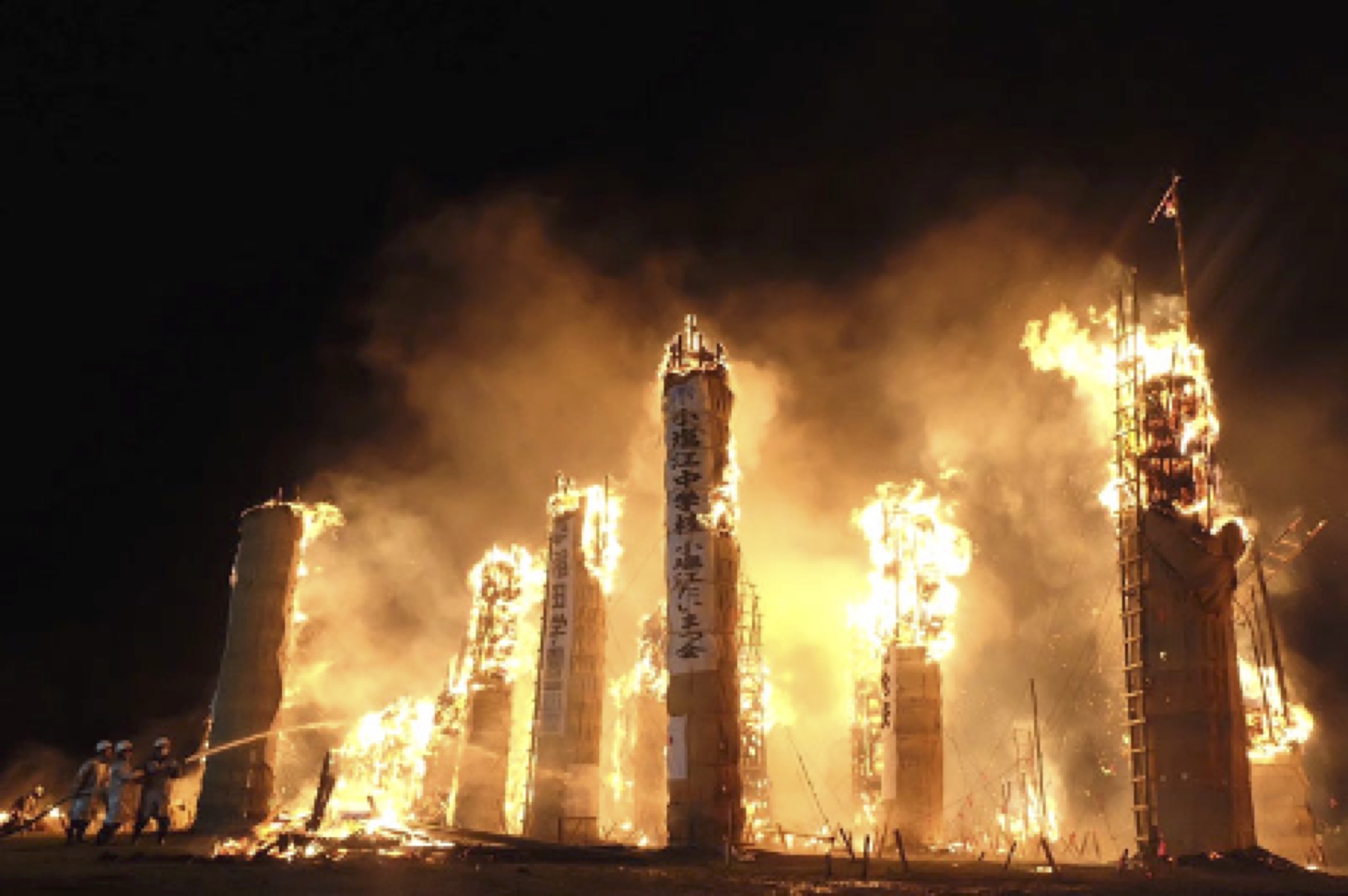
Figure 1. The Taimatsu Akashi festival (Source: Sukagawa City Tourism Product Association [4]).
Event tourism, digital outreach—including content produced by the Sukagawa City Official Channel (2020b)—and educational programs all play a key role in sustaining this legacy. Ultraman functions as a symbolic ambassador who unites these efforts. Across the city, physical landmarks such as the Peony Garden’s statue of the monster Gomora and a network of Ultra Hero statues—mapped and promoted through the Ultra Guide Map—visibly blend local heritage with popular culture. Sukagawa’s Ultraman-driven tourism, attracting 27.2% of visitors, aligns with Fukushima’s ‘Strengthening Strategy for Reputation and Memory Management,’ which fostered 51.4% positive views of the region’s agriculture and seafood by September 2023, countering stigma through cultural pride (Sukagawa City, 2017; New Fukushima Revitalisation Promotion Headquarters, 2024). These interventions reinforce Sukagawa’s identity as a “living archive” (Nora, 1989), where collective memory is curated across both physical and virtual landscapes.
These intersecting strategies reflect the hare–ke–kegare cycle, where Ultraman’s battles represent hare moments that restore balance after kaijū-induced kegare. The M78 residency program, festival integrations, and monuments like the Father of Ultra statue at City Hall enact a ritualistic renewal of Sukagawa’s post-disaster identity. As Shinichi Ōoka stated, “We want children to proudly say, ‘My hero is Ultraman,’ knowing he patrols Sukagawa.” (Sukagawa, 2013b, para. 7)—an affective assurance of safety and civic pride.
This vision aligns with Poulios’s (2014) concept of living heritage, which prioritises active participation over passive preservation. A 2017 city survey revealed that 27.2% of visitors cited Ultraman as their reason for traveling to Sukagawa, a testament to the material and symbolic efficacy of this integrated strategy (Sukagawa City, 2017). By merging fiction with reality, Sukagawa’s M78 Land of Light becomes not only an infrastructure of fandom but also a resilient cultural artifact—an evolving site of memory, affect, and recovery.
Memory, Archives, and Imagined Communities
Sukagawa’s post-disaster reconstruction redefines cultural heritage by transforming the city into a hybrid space where fiction and reality converge, aligning with Pierre Nora’s (1989) concept of lieux de mémoire (sites of memory)—sites where collective memory is curated to sustain historical continuity. Nora describes these as “no longer quite life, not yet death, like shells on the shore when the sea of living memory has receded” (1989, p.12). In Sukagawa, Ultraman monuments—such as Ultraman Taro, Ultra no Haha, and other at Taimatsu Street, JR Sukagawa Station Plaza, and City Hall—function as sites of memory anchoring Tsuburaya Eiji’s legacy and Ultraman’s mythic narrative in the urban landscape. As Andrew Littlejohn (2021) argues, post-disaster museumification fixes cultural forms to create a “storied landscape” for tourism and recovery (p.478). Unlike shinsai ikō (disaster ruins), which may evoke pain for locals as sites of loss while drawing tourists seeking to learn about the 3.11 disaster (Littlejohn, 2021, p.490), these monuments are constructed to celebrate resilience and cultural pride, bridging Sukagawa’s post-disaster identity with its tokusatsu heritage. For locals, they primarily symbolise civic pride and recovery, though subtle echoes of the disaster’s impact may linger; for tourists, they offer an engaging narrative of cultural continuity rather than tragedy.
Jacques Derrida’s (1995) archival theory complements this, positing that “the archivization produces as much as it records the event” (1995, p.17). Sukagawa’s archiving—through monuments, festivals, and digital platforms—shapes historical consciousness by framing Ultraman as a recovery symbol. Benedict Anderson’s (2006) imagined communities framework further illuminates this, where shared perceptions sustain identities. Anderson notes, “Communities are to be distinguished, not by their falsity/genuineness, but by the style in which they are imagined” (2006, p.6). Sukagawa’s dual registries—real residents and 27,635 virtual citizens of the M78 Land of Light (as of 29 January 2025)—foster an imagined community uniting locals, fans, and virtual participants.
These frameworks, enriched by Littlejohn’s concept of museumification, reveal Sukagawa’s living archive, which aligns with the hare-ke-kegare cycle, transforming disaster’s disruption (kegare) into communal renewal (hare). Littlejohn (2020) suggests that the Northeast’s susceptibility to museumification stems from post-tsunami devastation and chronic depopulation, remaking places as “museums of themselves” (p.491). Yet, Sukagawa’s community-driven branding, embodied in monuments and other facilities, curates memory with deep local engagement, fostering not only short-term economic recovery but also long-term cultural vitality. Initiatives like workshops and virtual citizenship engage youth and global fans, strengthening community ties and potentially mitigating the impact of depopulation. Sukagawa’s monuments, as visual anchors, centralise this process, balancing cultural continuity with the challenge of demographic decline to sustain its imagined community.
Institutional Initiatives: Museums, Archives, and Cultural Production
The city’s layout seamlessly integrates its physical geography with its fictional identity, incorporating Ultraman and kaijū monuments as cultural landmarks. This layered mapping system allows residents and visitors to navigate Sukagawa both spatially and imaginatively, reinforcing its connection to the Ultraman universe. Beyond its tangible spaces, the city also maintains dual registries—one for actual residents and another for virtual citizens of Sukagawa City M78 Land of Light. This dual identity extends into its archival and museum spaces, with institutions like the Eiji Tsuburaya Museum (2019) and the Sukagawa Tokusatsu Archive Center (2020) playing central roles in preserving and transmitting the city’s unique heritage. By intertwining real and imagined histories, these elements not only support long-term reconstruction but also foster a sense of cultural continuity and social reintegration.
Sukagawa’s practical initiatives—museums, archival centers, and repurposed facilities—extend its museumification, anchoring the imagined community in spaces that foster cultural continuity, intergenerational learning, and economic revitalisation. The Eiji Tsuburaya Museum, opened in 2019 within the Sukagawa Civic Exchange Center (tette), educates audiences through its Imagination Atelier, featuring six thematic sections: Fantasy Biology, Fantasy Mechanics, Tokusatsu World and Environmental Science, Tokusatsu Astronomy, Tokusatsu and Fables, and Tokusatsu Film Studies. These exhibits explore special effects techniques and thematic connections to Ultraman’s narratives, engaging visitors in interactive learning. In terms of visitor demographics, while national holidays such as Golden Week attract many tokusatsu fans from outside the prefecture, weekdays see a large number of parents with young children, as well as visitors from neighbouring cities (Sakaguchi, 2019, para.17). School groups, families, and international fans participate in kaijū design workshops, fostering civic pride and intergenerational engagement.
The Sukagawa Civic Exchange Center (tette), opened in 2019, marked a pivotal milestone in Sukagawa’s post-disaster reconstruction, serving as a multifaceted hub for public halls, libraries, and community support services, including child-rearing and civic group activities (Sukagawa Civic Exchange Center, 2023). Housing the Eiji Tsuburaya Museum, tette underscores Sukagawa’s deep ties to the Ultraman series and Tsuburaya’s pioneering special effects work, symbolising the fusion of cultural heritage with revitalisation efforts. The nine-year rebuilding process, documented in a city-produced film, highlighted challenges such as inconsistent water supply and the lack of social spaces, as recounted by citizens and officials (Sukagawa City Official Channel, 2020a). As the project progressed, tette evolved into a symbol of cultural renewal, revitalising the city centre and fostering community cohesion. The 2013 partnership with the fictional ‘M78 Nebula Land of Light’ shaped Sukagawa’s reconstruction, embedding its imaginative identity into physical spaces like tette, which serves as both a practical and symbolic anchor for the city’s heritage.
The Sukagawa Tokusatsu Archive Center, established in 2020 with the NPO Anime Tokusatsu Archive Center (ATAC), preserves special effects materials and promotes tokusatsu heritage. ATAC, founded in 2017 and a certified NPO since 2023, restores props, costumes, and miniatures, such as Ultraman suits, for educational exhibitions engaging locals and tourists. The Sukagawa Tokusatsu Juku workshops, a flagship program of the Archive Center, is open to junior high and high school students in Sukagawa, to learn special effects techniques, including miniature model-making, costume design, practical effects, and basic cinematography. Conducted year-round on weekends at the Archive Center and occasionally at the Naganuma Lab, these workshops cultivate appreciation for tokusatsu’s analogue craftsmanship. Engaging local schools, community groups, and international visitors, Tokusatsu Juku fosters intergenerational collaboration, preserves Sukagawa’s tokusatsu heritage, and reinforces its identity as Tsuburaya’s birthplace. The program encourages young participants to explore creative industries, countering depopulation by investing in cultural education and inspiring future tokusatsu creators.
To establish tokusatsu as a recognised facet of Japan’s cultural heritage, the Tokusatsu Culture Promotion Project Executive Committee was formed in 2018 through collaboration among Fukushima Prefecture, Sukagawa City, the local Chamber of Commerce and Industry, vocational schools, and cultural organisations like ATAC. This body designated 7 July—Tsuburaya’s birthdate—as Tokusatsu Day. Registered in February 2019, this annual event promotes tokusatsu filmmaking’s artistic and historical significance through community-driven screenings, workshops, and exhibitions, in partnership with the Sukagawa Tokusatsu Archive Center and Eiji Tsuburaya Museum.
In addition to its broader cultural initiatives, Sukagawa has established the Naganuma Lab, a former indoor gateball facility repurposed into a creative hub for tokusatsu production and related activities. The Sukagawa Tokusatsu Juku regularly utilises the space for special effects training and filmmaking workshops. Compared to the Sukagawa Tokusatsu Archive Center, the Naganuma Lab is located in a different area and contains additional facilities, designed with a practical focus on on-site shooting. The lab has even drawn prominent directors such as Higuchi Shinji and Miike Toshio, reinforcing Sukagawa’s central role in contemporary special effects filmmaking.
Beyond its year-round role in film production, the Naganuma Lab also served as a preparation site for the annual Naganuma Festival—a cherished tradition in Sukagawa’s Naganuma District with a 39-year history. Since its inception in 1985, sparked by the donation of a nebuta float from Aomori Prefecture, the festival has become renowned for its illuminated displays featuring warriors, historical figures, and other striking designs crafted by local students and enthusiasts. These floats were paraded through Kinmachi Street, drawing visitors for evening processions filled with vibrant colour, photography, and celebration.
However, the 2024 edition, held on September 14, marked the final installment of the Naganuma Festival due to population decline and a shortage of participants (NHK, 2024). Although the last procession drew a sizable crowd and reflected deep community pride, the festival’s closure underscores the demographic challenges that increasingly threaten the sustainability of local cultural practices. Yet Sukagawa’s commitment to tokusatsu continues to thrive through initiatives like the Naganuma Lab. While the loss of the Naganuma Festival marks a significant shift, its legacy—embodied in the Lab’s ongoing creative output—continues to surge Sukagawa’s community-driven cultural identity.
The analogue nature of tokusatsu—where scenes can be constructed within tight timeframes and participants’ efforts are directly visible on screen—contributes significantly to the success of these workshops and the high levels of participant satisfaction (Sakaguchi, 2024, para.19).
The Sukagawa Tokusatsu Juku started from June 2022, and after ten sessions, they finished the film Tamashii no Sakebi Yoroigā (魂の叫びヨロイガー, Fig.2). The film was premiered at the program’s closing ceremony on January 28, 2023, and was later screened in a public event at Sukagawa Civic Exchange Center tette on March 19, where students also acted as masters of ceremonies before a standing-room-only audience. After the first term concluded in March 2023, the project’s impact continued to spread. The film is now shown in rotation alongside Anno Hideaki’s Giant God Warrior Appears in Tokyo (2012) in the Sukagawa Tokusatsu Archive Center’s screening room and was also featured in the National Amateur Kaiju Film Championship [5] events held in Atami in 2023, earning positive reception. The monster suit of the main character, Yoroiger, created by the students, has been preserved alongside historic tokusatsu miniatures in the Archive Center’s collection.
Gathered loosely under the category of “junior high and high school students attending schools in Sukagawa City,” the students bonded over their shared interest in tokusatsu, unleashing their passion for this hobby—something they might not be able to express within their usual communities. (Sakaguchi, 2024, para.27)
The introduction of this bricolage approach to special effects, in which the forms and properties of materials were re-signified and imaginatively repurposed beyond their original functions, not only provided students with opportunities to develop their creative and technical skills but also fostered a sense of belonging. By working collaboratively to transform everyday objects into expressive tools of storytelling, participants cultivated both resourcefulness and community, building friendships rooted in a shared commitment to experimentation and collective making.
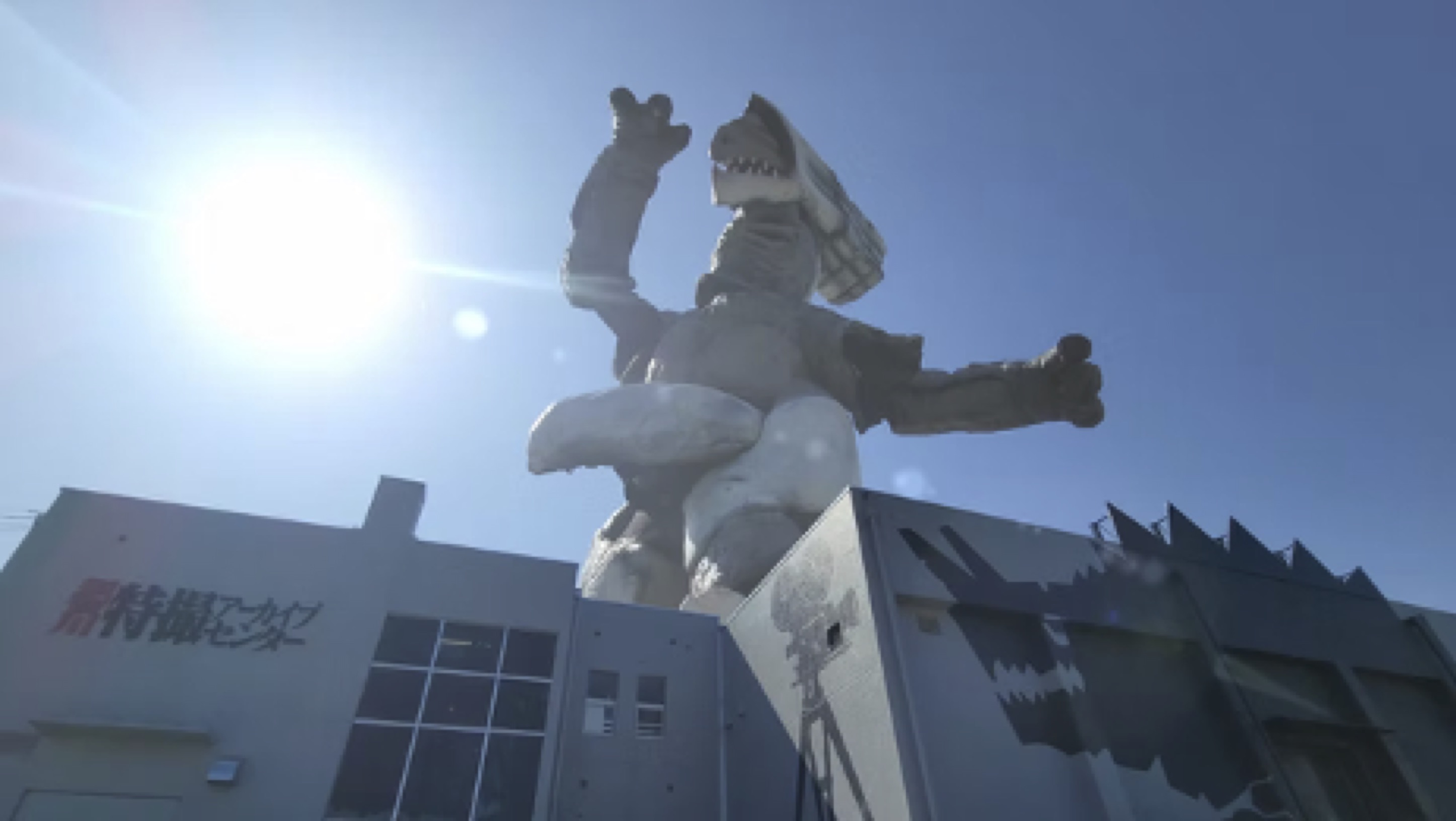
Figure 2. A still frame from Tamashii no Sakebi Yoroigā (魂の叫びヨロイガー), Tokusatsu Juku. (Source: Sukagawa City Official Channel [6])
Finally, Sukagawa’s reconstruction strategy aligns with the Living Heritage Approach, as outlined by Ioannis Poulios (2014), which emphasises the continuity of cultural practices and community-centered heritage management (Poulios, 2014, p.28). Rather than treating its association with Eiji Tsuburaya and Ultraman as a static legacy, Sukagawa actively integrates these cultural elements into everyday life, ensuring that its heritage remains dynamic and relevant. This perspective reflects Poulios’ argument that living heritage prioritises community participation over purely material-based conservation, a shift promoted by ICCROM’s Living Heritage Sites Program (Poulios, 2014, pp.28–29). Sukagawa’s initiatives—including the Tokusatsu Juku workshops, the virtual Sukagawa City M78 Land of Light, and the incorporation of Ultraman into local festivals and monuments—embody this approach by fostering active cultural transmission rather than passive preservation.
Just as Phrae, Thailand, revitalised its traditional knowledge through community-led heritage programs, Sukagawa has embraced its pop culture heritage as a tool for social cohesion, economic revitalisation, and cultural continuity. In doing so, it demonstrates that post-disaster recovery is not only about reconstructing physical spaces but also about sustaining the imagined communities and cultural narratives that connect people to their environment.
Conclusion: Memory, Heritage, and Resilience in Sukagawa
Sukagawa’s integration of local heritage into urban space is not just a means of preservation—it is central to the city’s ongoing efforts to rebuild, sustain, and reimagine its community. The city’s approach reflects the principles of living heritage, emphasising the transmission of cultural elements across generations within an imagined community. While discussions on heritage, preservation, and reconstruction often focus on institutions and physical spaces, Sukagawa’s case underscores the centrality of people in these processes. Post-disaster recovery is not solely about rebuilding structures but also about restoring lost memories, reimagining cultural landscapes, and addressing the emotional and social wounds left in the wake of destruction. Programs like the Sukagawa Tokusatsu Juku illustrate how hands-on creative practice—rooted in the re-signification of everyday materials—can simultaneously cultivate technical skills, strengthen community bonds, and inspire younger generations to take ownership of their heritage. In this way, cultural heritage becomes more than a symbol of the past—it acts as an active force that empowers communities to heal, adapt, and redefine their collective identity.
As one of many cities devastated by the Great East Japan Earthquake, Sukagawa continues to face the challenges of being located in a disaster-prone region. Earthquakes, tsunamis, and man-made crises have repeatedly tested the city’s resilience. The question, then, is not merely how to rebuild a community but how continuously to reconstruct an imagined community—one that remains adaptable to both historical continuity and recurring disruptions. Sukagawa’s response has been to integrate cultural heritage across multiple dimensions—from ancient myths to modern cultural icons such as Tsuburaya Eiji and Ultraman. This integration is not only about commemoration but also about continuity, as seen in initiatives like the Sukagawa Tokusatsu Juku, where young creators engage in the study and practice of special effects filmmaking. By foregrounding participatory models and the creative reinterpretation of heritage, Sukagawa demonstrates how cultural resilience is built through both institutional strategies and grassroots practices.
While this study offers a detailed examination of Sukagawa’s innovative approach, it is important to recognise its inherent limitations. As a study situated within a distinctive historical and cultural context, the findings may not fully capture the diversity of post-disaster recovery experiences in other regions. However, the very uniqueness of Sukagawa’s response—rooted in its ties to Tsuburaya Eiji and the Ultraman franchise—highlights the importance of examining place-specific strategies that blend popular culture with heritage practices. Such cases can illuminate possibilities and creative pathways that broader comparative studies might overlook. Future research could build on this work by exploring how diverse communities adapt cultural narratives to sustain resilience and reimagine collective identity.
Nevertheless, this cultural integration has transformed Sukagawa into a hybrid space where fiction, history, and contemporary identity converge. Beyond physical reconstruction and artistic training, this engagement extends into the digital realm through the creation of Sukagawa City M78 Land of Light Website, where thousands of virtual citizens register as part of this imagined community. By allowing individuals symbolically to embed themselves within this reconstructed identity, Sukagawa demonstrates how cultural memory can transcend geographical boundaries and function as a shared, participatory experience. This dynamic process transforms local heritage into a living, evolving force, ensuring that cultural memory is not passively preserved but actively shaped and transmitted.
Ultimately, Sukagawa’s model demonstrates that post-disaster recovery is not only about rebuilding the past but also about imagining and sustaining the future. The city’s success in weaving popular culture into urban development, education, and tourism highlights the potential of cultural narratives and creative participation in strengthening community identity, fostering resilience, and redefining placemaking in times of crisis. As natural and social landscapes continue to shift, Sukagawa stands as a testament to how memory, heritage, creativity, and imagination can not only preserve the past but also shape the future— building a resilient cultural legacy that endures uncertainty.
Notes
1. Tsuburaya collaborated with director Ishiro Honda on Godzilla (1954), using a ‘play-within-a-play’ format (gekichūgeki), where audiences watch the destruction unfold as if through media broadcasts.
2. Key contributors to Ultraman included screenwriter Mamoru Sasaki and director Akio Jissoji (Kamiya, 2021).
3. 3.11 Memorial Network. Available at: https://311memorial-network.com (Accessed: 10 June 2025).
4. Sukagawa City Tourism Product Association. Available at: https://www.sukagawa-kankoukyoukai.jp/Event/page08.html (Accessed: 16 June 2025)
5. National Amateur Kaiju Film Championship, 2023. Available at: https://amateurkaijucontest.wixsite.com/index/20yonago2023 (Accessed: 16 June 2025)
6. Sukagawa City Official Channel. Available at: https://www.youtube.com/watch?v=mn58Ovkg-pM&t=208s (Accessed: 16 June 2025)
References
Anderson, B. (2006). Imagined communities: Reflections on the origin and spread of nationalism (Revised ed.). London: Verso.
Boswell, R., Kearns, R., & Collins, F. L. (2024). Temporalities of creativity in city-making: DIY urbanism in post-earthquake Christchurch. Social & Cultural Geography, 26(2), 218–240. https://doi.org/10.1080/14649365.2024.2397997
Derrida, J. (1995). Archive fever: A Freudian impression (E. Prenowitz, Trans.).Chicago: University of Chicago Press.
Eco, U. (1972). The myth of Superman. Diacritics, 2(1), 14-22. https://doi.org/10.2307/464920
Fields Corporation. (2016). Fact book: Supplementary financial document for the first half of the year ending March 31, 2017. Chapter: 'CSR Activities', pp. 55–56. Tokyo: Fields Corporation. Available at: https://www.tsuburaya-fields.co.jp/ir/j/files/press/2016/press_20161028ae.pdf (accessed 6 March 2025)
Fukushima Prefecture. (2024). Reiwa 6-nendo tōsho yosan ni okeru fūhyō・fūka taisaku no zentaizō [Overview of reputation and fading memory countermeasures in the FY 2024 initial budget]. Available at: https://www.pref.fukushima.lg.jp/uploaded/attachment/625393.pdf (accessed 6 March 2025)
Fukushima Rural Infrastructure Development Division. (2022). Tōhoku daishinsai fukkō no kioku: Fujinuma damu fukkyū saiken no ashiato [The memory of the Great East Japan Earthquake recovery: Traces of the Fujinuma Dam restoration]. Available at: https://www.pref.fukushima.lg.jp/uploaded/life/605408_1678558_misc.pdf (accessed 6 March 2025)
Gagné, I. (2020). ‘Dislocation, social isolation, and the politics of recovery in post-disaster Japan’. Transcultural Psychiatry, 57(5), pp. 710–723. doi: https://doi.org/10.1177/1363461520920348
Hashimoto, K. (2018). Shisei rupo Sukagawa-shi (Fukushima-ken): Fukkōki kara hattenki e shin sutēji! [City government report on Sukagawa City (Fukushima Prefecture): A new stage from the recovery phase to the development phase!]. Shisei (City Government), 67, pp.14–19. Available at: https://www.toshikaikan.or.jp/shisei/2018/pdf/201803/2018_03_all.pdf (accessed 6 March 2025)
Higashi Nihon Daishinsai. (2023). Tōhoku no hisai san-ken, denshō shisetsu no raijō ga 100 man-nin koe 22-nen [Over 1 million visitors to disaster heritage sites in the three affected Tohoku prefectures in 2022]. Nihon Keizai Shinbun. Available at: https://www.nikkei.com/article/DGXZQOCC133920T10C23A2000000/ (accessed 7 March 2025)
IAEA. (2024). IAEA review of safety related aspects of handling ALPS-treated water at TEPCO’s Fukushima Daiichi Nuclear Power Station: Report on the mission to Japan conducted in April 2024. International Atomic Energy Agency. Available at: https://www.iaea.org/sites/default/files/2024-07-17_mission_report-april_2024.pdf (accessed 7 March 2025)
Imada, Y. (2023). Kodomo no kokoro wa kaijū Urutoraman to dō deau no ka [How Do Children's Hearts Encounter Kaijū and Ultraman?]. Research Bulletin of Naruto University of Education, 38, pp. 76–91. doi: https://doi.org/10.24727/00029708
Kamiya, K. (2021). Tokusatsu to sengo avangyarudo: Sasaki Mamoru sakuhin, Jissouji Akio kantoku sakuhin o chūshin ni [Tokusatsu and postwar avant-garde: Focusing on the works of Mamoru Sasaki and director Akio Jissōji]. Gendai Shakaigaku Kenkyū, 34, 39–56. doi: https://doi.org/10.7129/hokkaidoshakai.34.39
Kawasaki, M. (2000). Urutoraman wa naze shuwacchi to sakebu no ka? [Why Does Ultraman Shout “Shuwacchi”?]. Tōkyō: Media Works.
Kelly, W. (2012). Tohoku’s futures: Predicting outcomes or imagining possibilities. The Asia-Pacific Focus, 10(10-2), pp.1–6. Available at: https://apjjf.org/2012/10/10/william-w-kelly/3703/article (accessed 7 March 2025)
Léger, F., & Murphy, D. (Dirs). (1924). Ballet mécanique [Film]. Avaialable at: https://www.moma.org/collection/works/303856 (accessed 8 March 2025)
Littlejohn, A. (2020). Museums of themselves: Disaster, heritage, and disaster heritage in Tohoku. Japan Forum, 33(4), pp.476–496. doi: https://doi.org/10.1080/09555803.2020.1758751
Nakazawa, S. (2022). Kenryoku ya furui kokkakan o shōchō shinai, ishitsu na kyojin – Urutoraman. [Ultraman: An Unconventional Giant That Does Not Symbolise Power or an Ancient State Concept]. Pen+ Urutoraman o Miyo Zōho Ketteiban: Shodai kara Shin Urutoraman made, 529, June, p. 43. CCC Media House.
Namihira, E. (1976). Tsūka girei ni okeru “Hare” to “Kegare” no kannen no bunseki [An analysis of the concepts of ‘Hare’ and ‘Kegare’ in rites of passage]. Japanese Journal of Cultural Anthropology, 40(4), pp. 350–368. doi: https://doi.org/10.14890/minkennewseries.40.4_350
New Fukushima Revitalisation Promotion Headquarters. (2024). Fukushima Today- Steps for Reconstruction and Revitalisation in Fukushima Prefecture. Fukushima Prefecture. Available at: https://www.pref.fukushima.lg.jp/uploaded/attachment/655993.pdf (accessed 8 March 2025)
NHK. (2024). Kotoshi de saigo no “Naganuma Matsuri” yobimono no nebuta seisaku susumu [Final year of the “Naganuma Festival”: Nebuta float production underway]. Available at: https://www3.nhk.or.jp/lnews/fukushima/20240826/6050027225.html (accessed 23 June 2025).
Nora, P. (1989). Between Memory and History: Les Lieux de Mémoire. Representations, 26, pp. 7–24. doi: https://doi.org/10.2307/2928520
Poulios, I. (2014). Defining and managing ‘living heritage.’ In: The past in the present: A living heritage approach - Meteora, Greece. Ubiquity Press, pp. 25-30. Available at: https://www.jstor.org/stable/j.ctv3s8tpq.9 (accessed 7 March 2025)
Sakaguchi, M. (2019). Tsuburaya Eiji Myūjiamu Repōto [Eiji Tsuburaya Museum Report]. Media Geijutsu Karento Kontentsu (MACC). Available at: https://mediag.bunka.go.jp/article/article-15649/ (accessed 8 March 2025)
Sakaguchi, M. (2024). “Mono-zukuri” to “meikingu” no sōgo kankei ga tokusatsu bunka ni motarasu mono:“Sukagawa Tokusatsu Juku” repōto. [The Impact of the Interplay Between ‘Monozukuri’ and ‘Making’ on Tokusatsu Culture: A Report on the ‘Sukagawa Tokusatsu Juku’]. Media Geijutsu Karento Kontentsu (MACC). Available at: https://macc.bunka.go.jp/3586/ (accessed 8 March 2025)
Sakurai, Y. (1992). “Hare, Ke, Kegare” mondai e no gokyoku moderu no teian [Proposal of a Five-Elements Model for the “Hare, Ke, Kegare” Problem]. Kantō Gakuin Daigaku Ronshū, 1992(5), pp. 49–60. doi: https://doi.org/10.5690/kantoh.1992.49
Shinjō, S., & Ariga, T. (2015). A study on the transformation process of a traditional festival in regional cities: A case study analysis of the mutual relationship of social circumstance changes within Fukushima Prefecture, Sukagawa City Taimatsu Akashi. Nihon Kenchikugakkai Taikai Gakujutsu Kōen Kōgai-shū (Kantō), pp. 479-480. Available at: https://cir.nii.ac.jp/crid/1570291227545650688 (accessed 9 March 2025)
Shōgakukan (1984). Urutora Kaijū Daizenshū: Urutora Kaijū 610-tai ga Sōtōjō! (Terebikun Derakkusu). Tōkyō: Shōgakukan. Available at: https://ndlsearch.ndl.go.jp/books/R100000002-I000001693805 (Accessed: 9 March 2025).
Sukagawa City Official Channel. (2020a). Sukagawa Shimin Kōryū Sentā Kaikan Kiroku Eizō [Sukagawa Citizens Exchange Center Opening Documentary Video] [Documentary video]. YouTube, 21 June. Available at: https://www.youtube.com/watch?v=sku43CfcMMw (Accessed: 9 March 2025).
Sukagawa City Official Channel. (2020b). Reiwa 2-nen Taimatsu Akashi Kiroku Eizō (Taimatsu Seisaku kara Hon-sai made) Chōhen-ban [2020 Reiwa 2 Taimatsu Akashi Documentary Video (From Torch Production to the Main Festival) Extended Version] [Documentary Video]. YouTube, 28 December. Available at: https://www.youtube.com/watch?v=_h2IaLBM3iU (Accessed: 9 March 2025).
Sukagawa City. (2013a). Tōhoku daishinsai fukkō no kioku: Ano hi wo wasurenai tame ni [The memory of the Great East Japan Earthquake Recovery: So we do not forget that day]. Sukagawa City. Available at: https://www.city.sukagawa.fukushima.jp/_res/projects/default_project/_page_/001/009/518/skgshinsai_koukaiyou.pdf (Accessed: 9 March 2025).
Sukagawa City. (2013b). Shimai toshi teikei 2-shūnen kinen dokusen intabyū, Sukagawa-shi, Hashimoto Katsuya shichō, (Kabu) En'yashiro Purodakushon, Ōoka Shin'ichi shachō Intabyū tōji [Second anniversary of the sister city partnership: Exclusive interview with Mayor Katsuya Hashimoto of Sukagawa City and Shinichi Ooka, President of Tsuburaya Productions Co., Ltd.]. Available at: https://www.m78-sukagawa.jp/interview/ (Accessed: 9 March 2025).
Sukagawa city. (2017). “M78 Seiun Hikari no Kuni” shimai toshi teikei ni yoru jigyō kōka ni tsuite. [Impact of the Sister City Partnership with the “Land of Light” in the M78 Nebula]. Available at: https://www.city.sukagawa.fukushima.jp/_res/projects/default_project/_page_/001/002/603/1002603-01.pdf (Accessed: 10 March 2025).
Sukagawa City. (2023). Higashi Nihon Daishinsai Sukagawa-shi Fukkō e no Kiseki Higashi Nihon Daishinsai Fukkō Kōfukin kara Mita Sukagawa-shi no Fukkō [The Path to Recovery for Sukagawa City from the Great East Japan Earthquake: Recovery of Sukagawa City as Viewed Through the Great East Japan Earthquake Reconstruction Grant]. Sukagawa City. Available at: https://www.city.sukagawa.fukushima.jp/_res/projects/default_project/_page_/001/014/446/fukkou.kiseki.pdf (Accessed: 10 March 2025).
Sukagawa Civic Exchange Center. (2023). Shisetsu Gaiyō [Concept]. Sukagawa Civic Exchange Center. Available at: https://s-tette.jp/about/005277.html (Accessed: 10 March 2025).
Suzuki, T. (2023). Why Japan should stop its Fukushima nuclear wastewater ocean release. Bulletin of the Atomic Scientists. Available at: https://thebulletin.org/2023/09/why-japan-should-stop-its-fukushima-nuclear-wastewater-ocean-release/ (Accessed: 10 March 2025).
Tsuburaya Productions. (2013). “Sukagawa-shi × M78 Seiun Hikari no Kuni” no shimaishi toshi teikei ni yori “Sukagawa-shi M78 Hikari no Machi” tanjō! [Through the sister city partnership between Sukagawa City and the Land of Light in the M78 Nebula, “Sukagawa City M78 Hikari no Machi” is born!]. Tsuburaya Productions. Available at: https://m-78.jp/news/n-1826 (Accessed: 10 March 2025).
Zhou, X. (2024). Uncharted effects of Fukushima nuclear plant wastewater discharge on marine life. Journal of Plant Ecology, 17(3), pp.1-4. doi: https://doi.org/10.1093/jpe/rtae006
Article copyright Angela Longo.




The electronic journal of contemporary japanese studies was founded on 9 January 2001.
Page created 16 December 2019, last modified 16 December 2019.
Email the webmaster if you have any problems.
Copyright electronic journal of contemporary japanese studies.


