Human Resources for Global Cooperation or Competition? How Japanese Universities Have Articulated the Call for Global Graduates
Volume 24, Issue 2 (Article 4 in 2024). First published in ejcjs on 16 August 2024.
Abstract
This article investigates the proposals of ten Japanese government designated “Top Global Universities,” (TGUs) which participated in the Japanese Ministry of Education’s (MEXT) Project for the Promotion of Global Human Resource Development from 2012-2016. The purpose of the study was to discover how TGUs articulated the government's call for global human resources: What types of global citizens did they intend to foster and how? Comparisons are drawn between the TGUs’ target global competencies for graduating students, and the global competencies specified by MEXT and other prominent organisations including: UNESCO, the OECD, and the International Baccalaureate (IB). In the comparisons, two dominant models emerge: Neoliberal global citizens, whose primary role is to serve their nation as competitors on a global stage; and transformative global citizens, who are committed to serving those beyond their national borders. The author concludes that it is essential to promote the transformative global citizen model.
Keywords: Internationalisation of higher education, global human resources, global citizenship education, global competencies, Japan
Introduction
In response to growing concern over the economic effects of globalisation and depopulation, the Japanese Ministry of Education (MEXT) launched the Program for the Promotion of Global Human Resource Development, also known as the Go Global Japan (GGJ) Project from 2012 to 2016. 47 government-designated “Top Global Universities” (TGUs) participated in the program. Its aim was
to foster human resources who can positively meet the challenges and succeed in the global field, as the basis for improving Japan’s global competitiveness and enhancing the ties between nations. Efforts to promote the Internationalisation of university education in Japan will be given strong, priority support. (MEXT, 2012)
In the description above lies a potential conflict of interests: The Ministry called for university graduates to be both “competitive” in the “global field” and “enhance the ties between nations.” In the field of global citizenship education (GCED), how global citizenship is defined varies a great deal depending on one’s motivation, cultural background, lived experiences, etc. However, most interpretations tend to fall on a spectrum between the neoliberal global competitor, and the transformative conscientious global citizen (Shultz, 2007). Based on the above statement, it seems MEXT was calling for a mix of the two. In Japan, however, the concept of global human resources, “is directly related to the national, economic and social development of Japan” (Yonezawa, 2014, p. 39). Thus, MEXT’s global jinzai framework is ultimately more of a competitive model. Still, how did the universities that participated in the GGJ Grant articulate the Ministry’s call for global human resources? Were their approaches competitive or more transformative?
For some time now universities in Japan and overseas have been under pressure from the business community and other stakeholders, to de-emphasise traditional liberal arts education in favour of preparing students for the job market (Jenkins, September, 2015). Growing emphasis on teaching international and intercultural competencies are also perceived as valuable for providing job opportunities. Knight warns however, that “this approach ignores the social, cultural, personal development, and world-understanding benefits of IHE [Internationalisation of Higher Education].” (2013 p. 82)
The first aim of this study is to determine how MEXT’s global human resources framework compares to the global citizenship frameworks of leading organisations in the field of GCED, for example the United Nations Educational, Scientific and Cultural Organisation (UNESCO), the Organisation for Economic Cooperation and Development (OECD) or the International Baccalaureate (IB). The second aim of this study is to determine how TGUs articulated the call for global human resources. Did they promote global competition or cooperation? What specific global competencies did they target and how did they plan to instill them in their students?
Key Questions
Specifically this study aimed to answer the following questions:
1. What frameworks exist for defining global competence among leading international, academic institutions and organisations (i.e. UNESCO, OECD, IB, OxFam, etc)?
2. What frameworks do MEXT and Japan’s TGUs use to define target global competencies for their students, and how do they compare with each other?
3. How do TGUs in Japan propose to develop students with global competencies?
Literature Review
This study includes a number of similar terms and concepts which need to be clarified including: global competencies, global human resources, global citizens, and global citizenship education. Global or intercultural competencies are categorised by Deardorff as knowledge, skills and attitudes (2012) which help global citizens thrive in an ever more globally connected world.
According to Reimers (2011), global competencies fall into three interdependent dimensions:
1. An openness to cultural differences and a willingness to engage with others;
2. The ability to speak, understand, and think in more than one language
3. Deep knowledge of world history, geography, and global issues.
Other commonly cited global competencies include: critical and creative thinking skills, risk taking, empathy, etc.
Global citizenship has various interpretations, ranging from the neoliberal to the transformative (Shultz, 2007). The neoliberal global citizen is “internationally mobile and readily employable in a variety of cultural contexts.” (p. 67). Neoliberal global citizens are primarily concerned with success in the capitalist world economy. These citizens, typically from the Global North (i.e., developed countries) prosper in the global marketplace, often at the expense of citizens of the Global South (i.e., developing countries and former colonies of the North). Neoliberal global citizens, whether they realise it or not, perpetuate the unequal power structure of the Northern dominated global economy (DeCaro, 2014, Shultz, 2007).
Transformative global citizens understand their role as “one of building relationships through embracing diversity and finding shared purpose across national boundaries.” (Shultz, 2007, p. 255). They may possess all the global competencies of the neoliberal, but use their abilities for more than economic benefit. Transformative global citizens primarily take action to improve the conditions of the planet and its people.
Prominent researchers call for the transformative model (Kim, 2018, Kahn and Agnew, 2017, Calloway-Thomas et al., 2017, Dill 2015, Jorgenson and Shultz, 2012, Reimers, 2011, Andreotti, 2006), and the American Association of Colleges and Universities (AAC&U) promotes transformative GCED as well. Yet the neoliberal framework is the most commonly taught in higher education programs (Shultz, 2007, Aktas, Pitts, Richards, & Silova, 2017). The AAC&U, has defined global learning as “a critical analysis of and an engagement with complex, interdependent global systems and legacies (such as natural, physical, social, cultural, economic, and political) and their implications for people's lives and the earth's sustainability.” (n.d.) GCED involves not only the acquisition of knowledge, but also taking action. Schattle (2008) framed GCED into three primary concepts: awareness, responsibility and participation. According to Lilley et al, “When intertwined, these components become greater than their individual parts.” (2017. p. 9).
In Japan the global jinzai framework is promoted by MEXT and the Ministry of Economy, Trade and Industry (METI) to be taught in Japan’s TGUs. The global jinzai model, as stated above, contains both neoliberal and transformative characteristics, but is also shaped by local culture and domestic concerns, such as a stagnant economy brought about by a low birthrate and aging society. The Ministries have published a global jinzai framework to explain the concept in English (Figure 1 below). In the infographic we can see quotes describing commonly cited global competencies, e.g. “ability to think well,” communication in a foreign language, ability to “step forward” (take action). We also see competencies more suited to Japanese business culture: “Ability to work in a team,” “ability to listen carefully,” and “submission to discipline” perhaps included to ensure that globalised workers still follow the orders of their local Japanese superiors. But what clearly reveals MEXT and METI’s global jinzai to be a Japan-centric, competitive framework is the phrase, “ability to understand and take advantage of different cultures.” Here it is clear that Japanese university students are to be trained as global human resources, primarily to benefit the nation, not the world as a whole.
Conceptual Framework
Understanding that MEXT had called on TGUs to prioritise the production of global jinzai graduates, but also aware that universities might have their own priorities as academic institutions of higher learning, I was curious to see how they had articulated MEXT’s global mandate. TGU administrators might have simply adopted MEXT’s framework, but they may have also borrowed from other international GCED models such as UNESCO or the OECD. Another relatively recent influencer in Japan is the International Baccalaureate (IB), a non-profit education foundation with a mission to “develop inquiring, knowledgeable, and caring young people who help to create a better and more peaceful world through intercultural understanding and respect” (IB, n.d.). The Japanese government has recognised the potential of an IB education. As part of MEXT’s 2013 campaign to foster global jinzai, it called for the creation of 200 new IB high schools by 2018. With a total of 67 in 2024, that goal has yet to be reached, but MEXT continues to urge local governments to develop IB education in each prefecture and recently extended the 200 schools goal to the end of fiscal year 2023 (Jimbo, 2021).
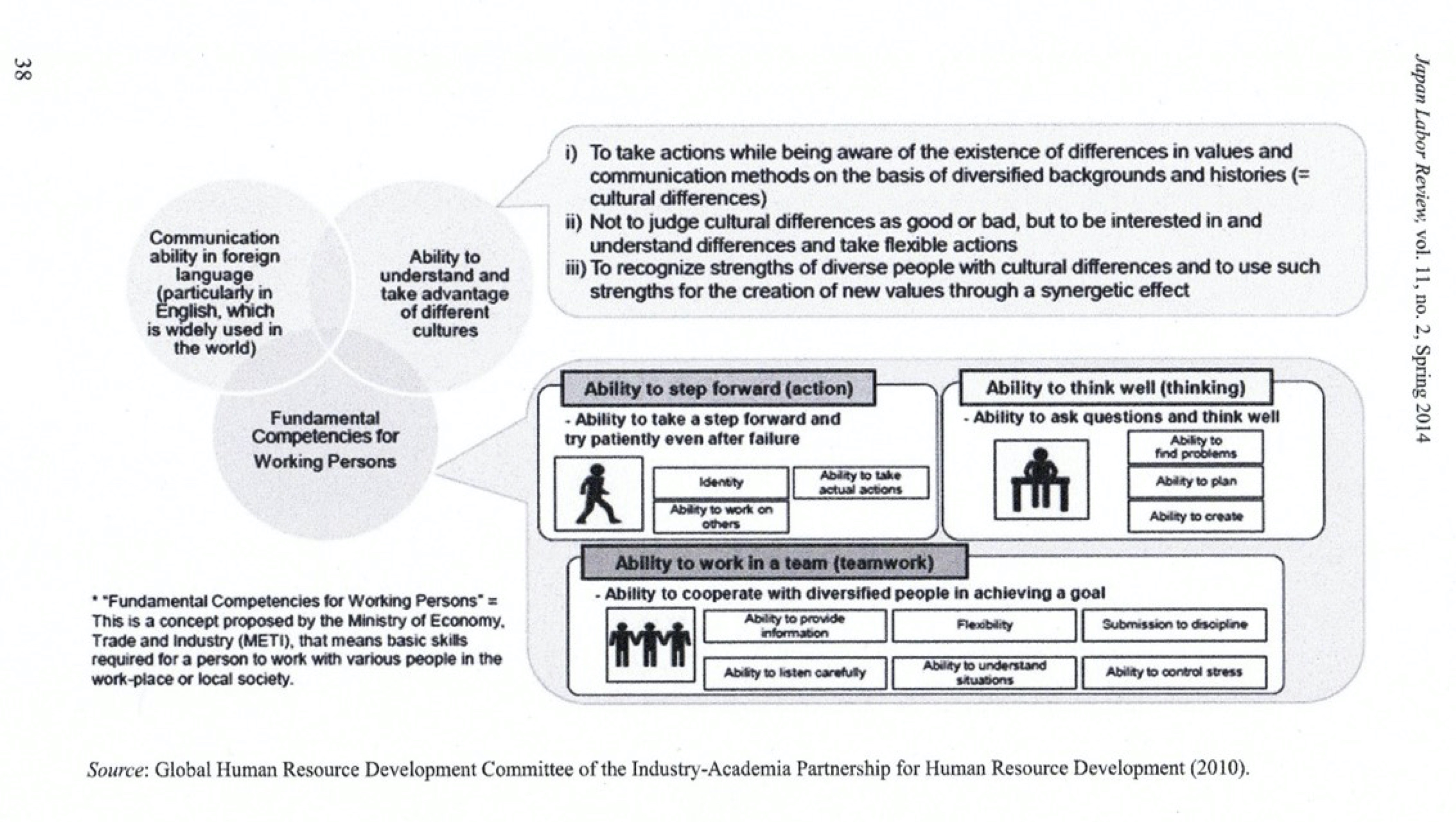
Figure 1. Abilities commonly required for global human resources. Source: Japan Labor Review, 11-2, Spring 2014, p. 38.
Methods
For this study, I employed Bowen’s methods for document review (2009). Procedures included: Selection of documents; skimming for GCED frameworks, lists of competencies, descriptions, etc; scanning, coding and making theoretical comparisons. The three phases were:
1. An International Education Organisation Competency Frameworks Comparison to determine how the MEXT Global Jinzai model compared with GCED models published by other international education organisations;
2. Japanese Top Global University Competency Frameworks Comparison to determine how TGUs articulated MEXT’s call for global jinzai graduates;
3. Top Global University Competency Building Strategies Comparison to determine how TGUs planned to foster global competencies in their students
The Initial phase began with a literature review of established leaders in the field of GCED. The following organisations (some more oriented to international education and some more oriented to global economics) were selected for having published frameworks listing competencies needed for young people preparing for a global future: UNESCO, the OECD, OxFam, IB, Partnership for 21st Century Skills (P21), and New Pedagogies for Deeper Learning. GCED frameworks were displayed on websites, in mission statements, reports, etc. All were intended for the general public or for those with specific interests in GCED (e.g., academics). Since the initially identified frameworks were from organisations primarily based in the West, I decided to add an Asian global framework to the study, and included the Singapore Ministry of Education (MOE). All of these frameworks, I compared with the global jinzai framework developed by MEXT.
The second and third phases focused specifically on GGJ grant proposals submitted to MEXT by 47 TGUs in 2011. The proposals were all written in a standard format in which the universities were required to list target global competencies, as well as describe specifically how they intended to foster them in their students. This made it much easier to make comparisons. Of the 47 government selected TGUs, I chose ten private and public universities from around Japan, which I felt represented the group as a whole.
Concept coding (Miles, Huberman and Soldana, 2020) was employed in all three phases as a means of identifying similar target competencies that had been described in a variety of ways. Initially the IB Learner Profile, a clear and concise set of ten global traits, was used as an a priori code list. It was later revised thematically and listed into a matrix vertical axis. Below I describe each of the three studies in more detail.
Phase 1: International Organisation Competency Frameworks Comparison
The first comparison is an analysis of global competency frameworks from established, international education organisations: Oxfam, UNESCO, the OECD, IB, P21, and Deeper Learning. It also looks at frameworks from the Singapore MOE, in addition to MEXT from Japan, in order to provide another Asian perspective on global competencies, which for the most part, tend to be defined from a Western perspective (Dill, 2015, Jooste and Heleta, 2017, Garson, 2012). The competencies specified by each organisation have been listed and coded by concept (Miles, Huberman and Soldana, 2020), in order to draw comparisons and reveal patterns (See Tables 9 and 10 below).
To compare the global competencies of the eight global education/economic organisations, first their names were listed across the top of a Table. The competencies, as they appeared in the organisational documents, were listed below the names. Based on trends appearing in the comparisons and in global citizenship literature, competencies were categorised according to concept, which are listed on the left of the sheet, and colour-coded. Initially the IB Learner Profile was used as an a priori coding model, but later included in the study and replaced by the concepts that have become the vertical axis of the Table.
Observing the competencies outlined by these organisations side-by-side in Table 1 and 2, they fell on a spectrum between two categories. Table 2 reveals organisations that focus on competencies related to individual or self-improvement (i.e., knowledge, thinking, communication, collaboration, and taking action). They have been labeled here as having more competitive frameworks. Individuals trained to develop only these competencies will be of benefit to their employer and perhaps the national economy by extension. These frameworks have been labeled competitive, not because the above mentioned competencies are innately competitive but because they are all related primarily with individual benefit (except perhaps collaboration).
Frameworks that include not only self-improvement competencies, but also ones that could benefit the lives of others (particularly beyond the local or national community), such as open-minded, caring, or having a cosmopolitan outlook, have been labeled as transformative. The competencies have also been colour-coded from lighter to darker, as they transition from individual-centred to more collective. In cases where an organisation has indirectly expressed a competency in their documents, the cell has been left blank but coloured.
All eight organisations agree that individual-oriented competencies are important global traits. All organisations express the need for knowledge, specifying cultural literacy and awareness of global issues. Deep Learning and P21 specify digital or IT literacy. Likewise all nine organisations stress the need for thinking skills, critical and creative (innovative, inventive), and problem-solving skills. In addition, all nine organisations acknowledge the need for better communication and collaboration skills. The Singapore MOE specifies “relationship management,” revealing transformative leanings in choice of words. But it is in the lower half of the tables that we begin to see the clear fundamental differences, and the emergence of the two types of frameworks.
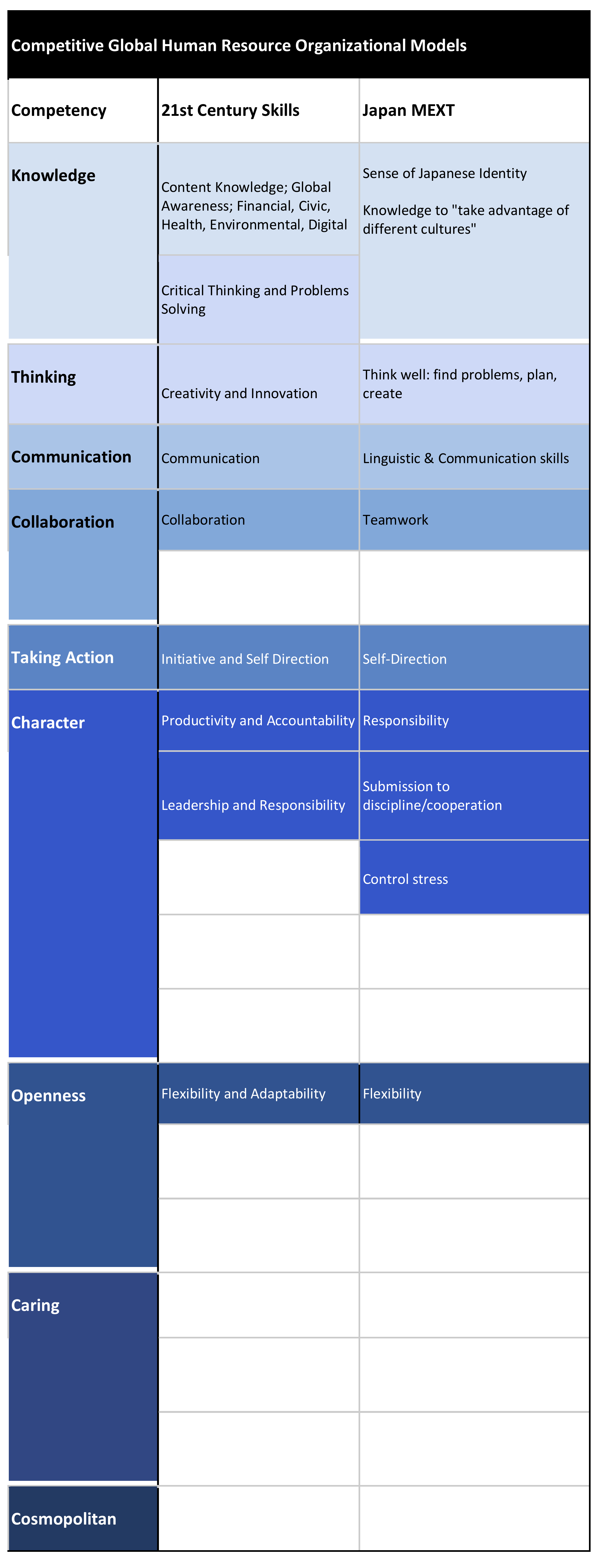
Table 1. Competitive Global Human Resource Organisational Models
Competitive Global Human Resource Models
The MEXT and P21 frameworks are clear competitive models as can be seen in Table 1. The P21 was founded in 2002 as a coalition bringing together the US business community, education leaders, and policymakers to position 21st century readiness at the centre of US K-12 education (P21, 2018). Together they came up with the “4Cs” (Critical Thinking, Creative Thinking, Communication, and Collaboration). The framework has since expanded to include other competencies, but it is still a more national human resource model rather than global, as it promotes skills centred on self-improvement for the benefit of future US employers. Similarly Japan’s MEXT framework is essentially a national model, reflecting the human resource needs of Japan in an era of globalisation. For example, MEXT is the only organisation to specify a need for knowledge of national identity (unlike Singapore, British, or US frameworks). And again there is the troubling phrase, “ability to understand and take advantage of different cultures.” MEXT’s competencies, when viewed as a whole, certainly reveal a nationalistic and competitive perspective. Table 2 below lists the competencies promoted by more transformative organisations.
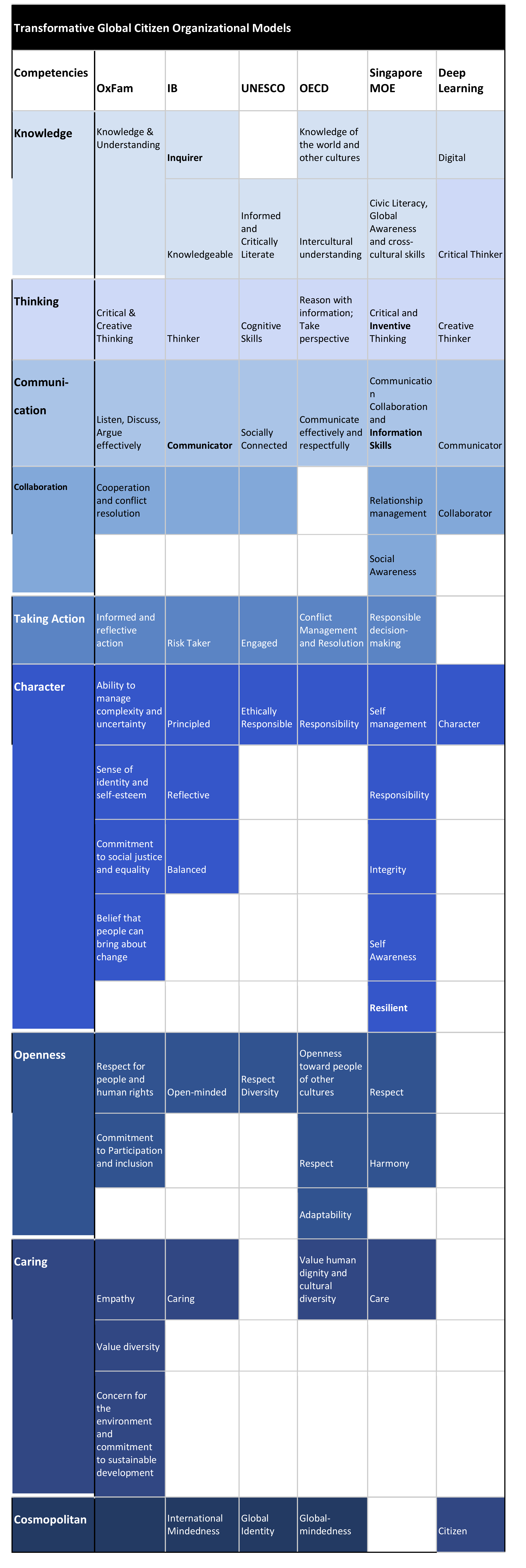
Table 2. Transformative Global Citizen Organisational Models
Transformative Global Citizenship Frameworks
New Pedagogies for Deep Learning, an organisation with original links to P21, identifies 6Cs instead of four. They have added “Character” and its associated traits: grit, tenacity, perseverance, resilience, and lifelong learning. They have also added “Citizenship,” which they define as “a global perspective; understanding of diverse values and worldviews; genuine interest in human and environmental sustainability; solving ambiguous and complex problems in the real world to benefit citizens.” (New Pedagogies for Deep Learning, 2014). Thus, Deep Learning takes the human resources competencies of P21 and adds a more cosmopolitan vision, putting their framework in the Transformative GCED realm.
In addition, five other organisations included competencies that revealed a more transformative outlook. Not surprisingly, UNESCO, which cites being “ethically responsible” (2015, p. 25) among other qualities, has a transformative outlook, as does the OECD. The OECD began measuring global competencies as part of its Programme for International Student Assessment (PISA) exam in April 2018 (Ramos and Schleicher, 2016), specifically cites global-mindedness:
A globally-minded person has concerns for other people in other parts of the world, as well as feelings of moral responsibility to try to improve others’ conditions irrespective of distance and cultural differences (Boix Mansilla and Gardner, 2007). Globally-minded people care about future generations, and so act to preserve the environmental integrity of the planet. (p. 17)
The IB and Oxfam, two well-established primary and secondary international education organisations, promote “international-mindedness.” Perhaps most importantly from a transformative standpoint, Oxfam and the IB stress taking action. The IB states that students who are caring “have a commitment to service, and act to make a positive difference in the lives of others and in the world around us.” (n.d.)
Finally, the Singapore Ministry of Education (MOE) is included in this study because, as some researchers have noted, there is a Western bias with regard to global competency. Dill claims that many Western global frameworks compel students to conform to an individualist model (2015). This may not be appropriate for students living in collectivist societies (e.g., many parts of Asia). While it may be overgeneralising to compare the West as individualist and Asia a collectivist, Wang, Deardorff and Kulich’s research reveals that Chinese citizens and institutions, while influenced by Western thoughts on global competence, also have their own ideas. For example, maintaining “Harmony (和諧) is the chief goal of human behaviour for most Chinese.” (2017, p. 98). Harmony is also listed as one of the Singapore MOE’s global competencies. Singapore’s list reflects the needs of its diverse and well-educated society, e.g., to be able to “work with people from diverse cultural backgrounds.” (p. 3). Singapore MOE also places importance on personal responsibility and consideration of others, which is not as clearly stated in other frameworks.
Final Observations
In the transformative GCED frameworks we can see the inclusion of foreign language skills in the communication category. They are specifically mentioned by the IB and the OECD. Foreign language skills are valued by transformative GCED organisations as a means, not only to communicate one’s point, but more deeply to understand others. For the most part, we do not see foreign language skills expressed by neoliberal models, with the exception of MEXT, which does stress the need for English, primarily for competitive gain. P21 omits foreign language skills, likely because they are addressing a primarily English-speaking audience. Still, promoters of transformative global citizenship would argue that even native English speakers should learn another language in order better to understand and appreciate people from other cultures (Aktas et al, 2017). Lastly, certain competitive frameworks listed “flexibility” (P21 and MEXT), which has been noted in the “openness” category. While this flexibility may be a demonstration of open-mindedness, transformative frameworks go much further, using expressions of “respect,” (Singapore MOE), “respectful of diversity” (UNESCO) and “commitment to participation and inclusion” (OxFam).
Phase 2: Japanese Top Global University Competency Frameworks Comparison
The second study is a comparison of ten Japanese national, public, and private TGUs, which serve as a sample of the 47 that were specifically selected by MEXT to promote global human resource development in 2012 as part of the GGJ Grant. The following institutions were selected based on their previously established international education track records. They also represent a variety of regions and types of universities. They are a mixture of what are classified in Japan as National University Corporations (NUCs), as well as public and private institutions:
Type A Type B
Tohoku University (NUC) Tsukuba University (NUC)
Akita International University (Public) Tottori University (NUC)
Doshisha University (Private) Kobe University (NUC)
Kwansei Gakuin University (Private) Ritsumeikan University (Private)
Waseda University (Private) Musashino Art University (Private)
Each participating institution was required to submit GGJ Outlines in English and Japanese, which have been made available to the public at the Japan Society for the Promotion of Science website. In the GGJ Outlines, each institution listed the global competencies they expected their students to achieve by graduation. This became the focus of the second comparison study. The TGU global competencies were organised using the same concept coding as Phase 1 (Tables 1 and 2).
Initial Observations
In the category of knowledge, most universities identify “cultural understanding” combined with knowledge and skills in the students’ areas of specialisation. In alignment with MEXT, five universities across the competitive to transformative spectrum also stressed the importance of Japanese cultural knowledge: Japanese culture (Tohoku), Japanese history (Doshisha) or “a new awareness of Japan and Japanese identity” (Ritsumeikan). Tottori and Musashino Art Universities emphasise the promotion of Japan, e.g. “ability to explain Japan” (Tottori) and “ability to transmit Japanese culture” (Musashino).
Given that thinking skills were so widely promoted by the organisations in the first study, and particularly MEXT, it was surprising to discover that thinking goes unmentioned by many of the universities in this study. Only five TGUs listed thinking skills and only Waseda specified “critical thinking.”
Since all universities at least inferred that foreign language skills are important, a new category was added. Tottori University, Ritsumeikan, and Musashino are very explicit about English, which suggests that building English communication skills was a fundamental part of their GGJ proposals.
Collaboration, despite being identified as a necessary competency by the IB, Deep Learning, P21 and other organisations, including MEXT, is never articulated, except by Waseda: “cooperativeness and leadership.”
Taking Action: Seven out of ten TGUs listed competencies that could be associated with taking action. The competencies listed in this category are mainly taking action for personal and national interests: “Courage and the spirit of challenge (Waseda); “determination” (KGU); “Initiative on an international scale” (Tohoku), although in the case of Tsukuba, “taking action in the field of international cooperation” has a uniquely transformative tone.
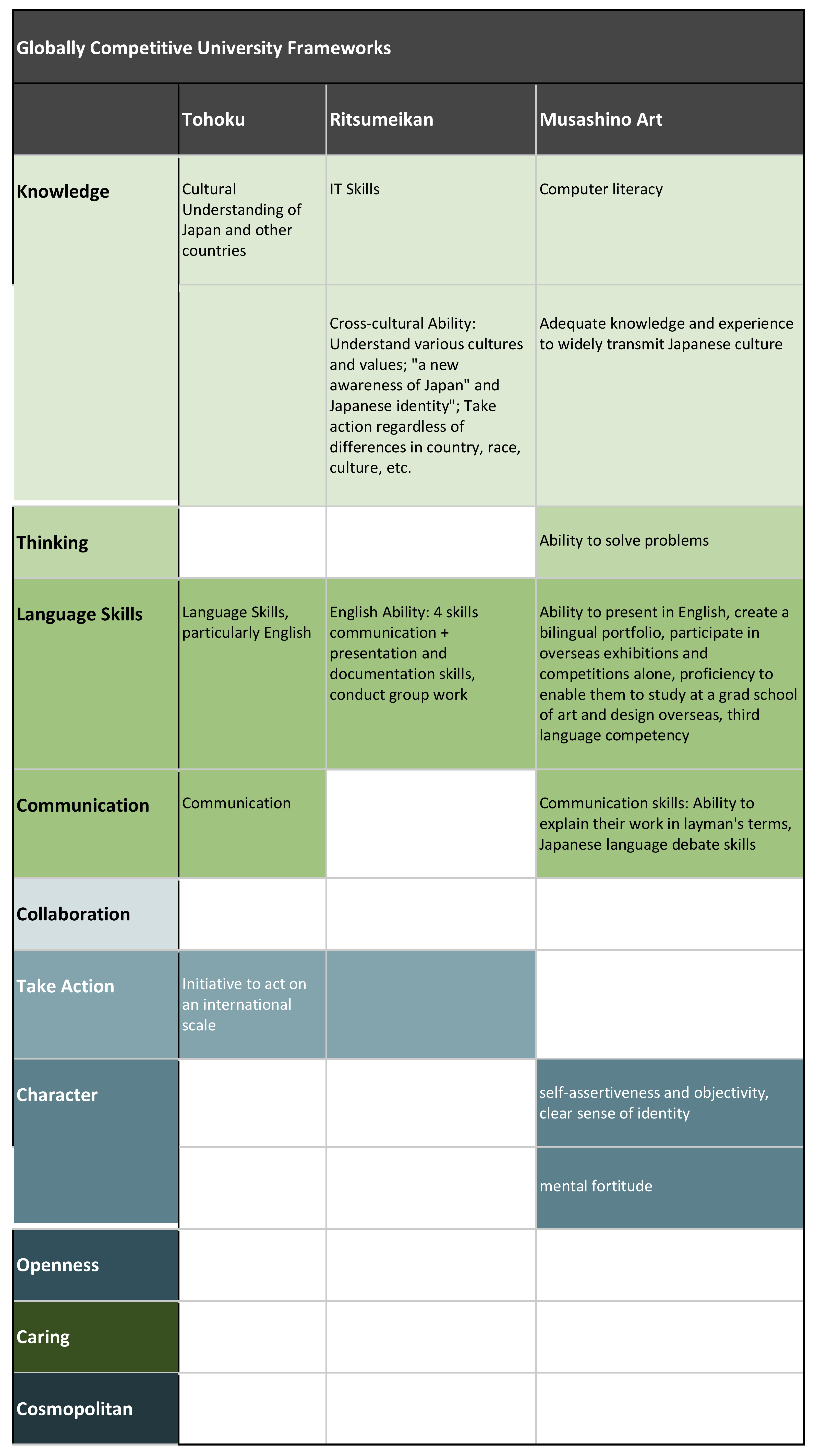
Table 3. Globally Competitive University Frameworks
Global Human Resource Frameworks
Similar to the global education frameworks of the international organisations of the first study, the competencies listed by the ten TGUs could be arranged on a spectrum between competitive and transformative. Universities that seemed to promote more of a competitive model were Ritsumeikan, Tohoku, and Musashino Art University. While Ritsumeikan stressed it is “important to understand various countries,” none of the three specified a need to go beyond understanding (e.g., caring, taking action to help, acting responsibly, etc.). Rather, these universities only stated competencies that would be of direct benefit to individuals, their employers, and Japan by extension (e.g., computer literacy, English, and the ability to self-promote and transmit Japanese culture overseas).
Soft Global Citizen Frameworks
Borrowing a term from Andreotti (2006), there are three universities that promote “soft” Global Citizenship. They are: KGU, AIU, and Kobe University. These three went beyond the competitive framework to stress not only cultural understanding, but additional competencies that indicate they are interested in the welfare of others beyond Japan. AIU stresses the need for its students to be competent in a foreign language in addition to English, which infers a belief in international understanding. KGU promotes student self-awareness and high moral values, and Kobe University promotes respect for “individuality and diversity.”
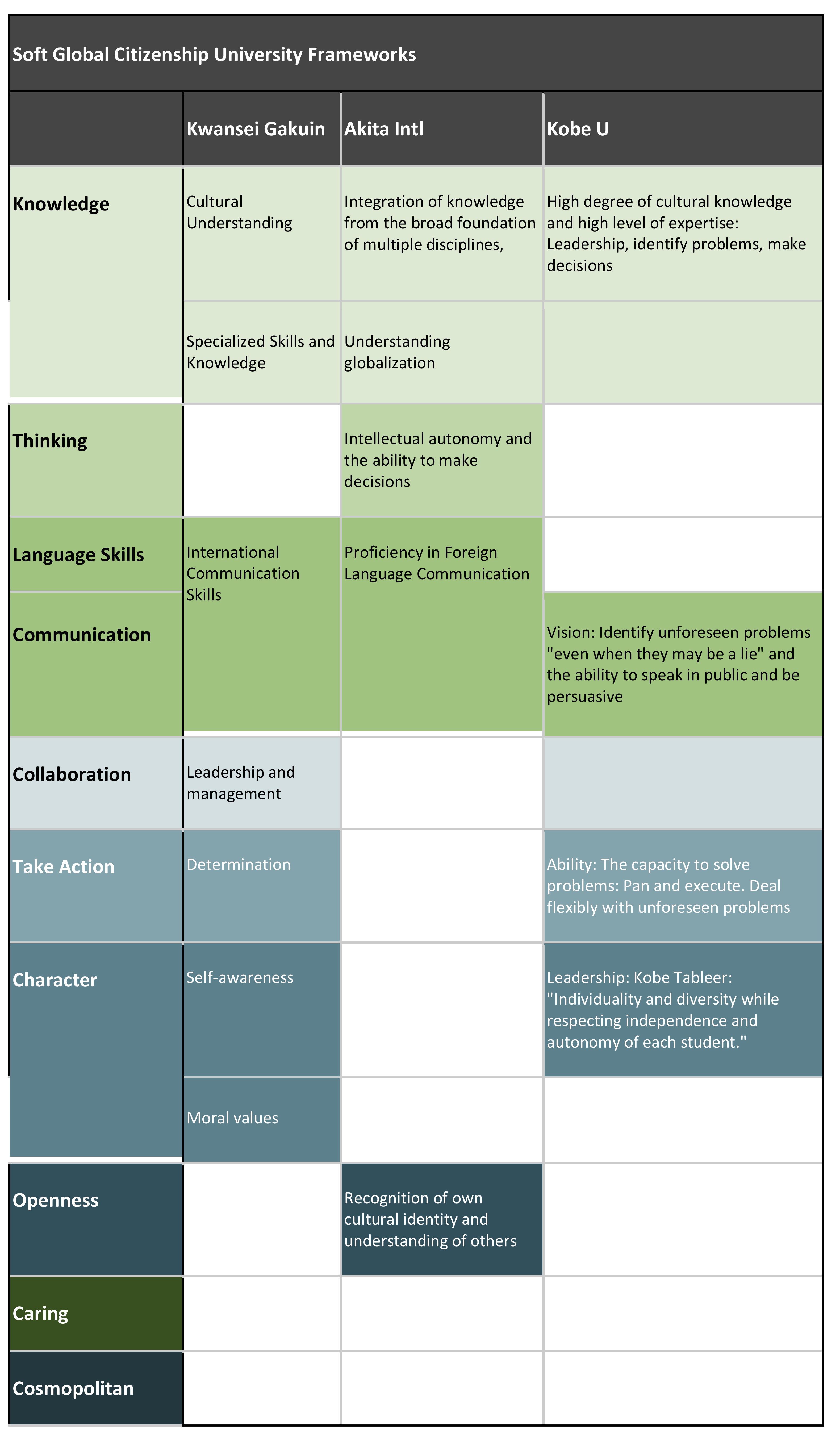
Table 4. Soft Global Citizenship University Frameworks
Of the ten universities, there are four which align with transformative frameworks similar to those of Oxfam, the IB, and the OECD. Waseda, Doshisha, Tsukuba, and Tottori Universities go well beyond the 4Cs, providing significant detail with regard to character-based competencies, such as openness and care for others. Waseda describes “high moral ethics,” “a commitment to serving others and a spirit of gratitude.” Tottori stresses not just intercultural understanding but “empathy” which implies caring for others. Doshisha articulates respect for others and high moral standards “seeking the realisation of fairness and justice in our global society.” Waseda and Tsukuba also make statements that are highly cosmopolitan in nature: “Aspirations for world peace and abundance for all” and “deep insight capable of making contributions to the system of universal knowledge by learning locally, taking regional knowledge to the world.” Here Tsukuba stresses the importance of sharing local expertise to benefit others on a global scale.
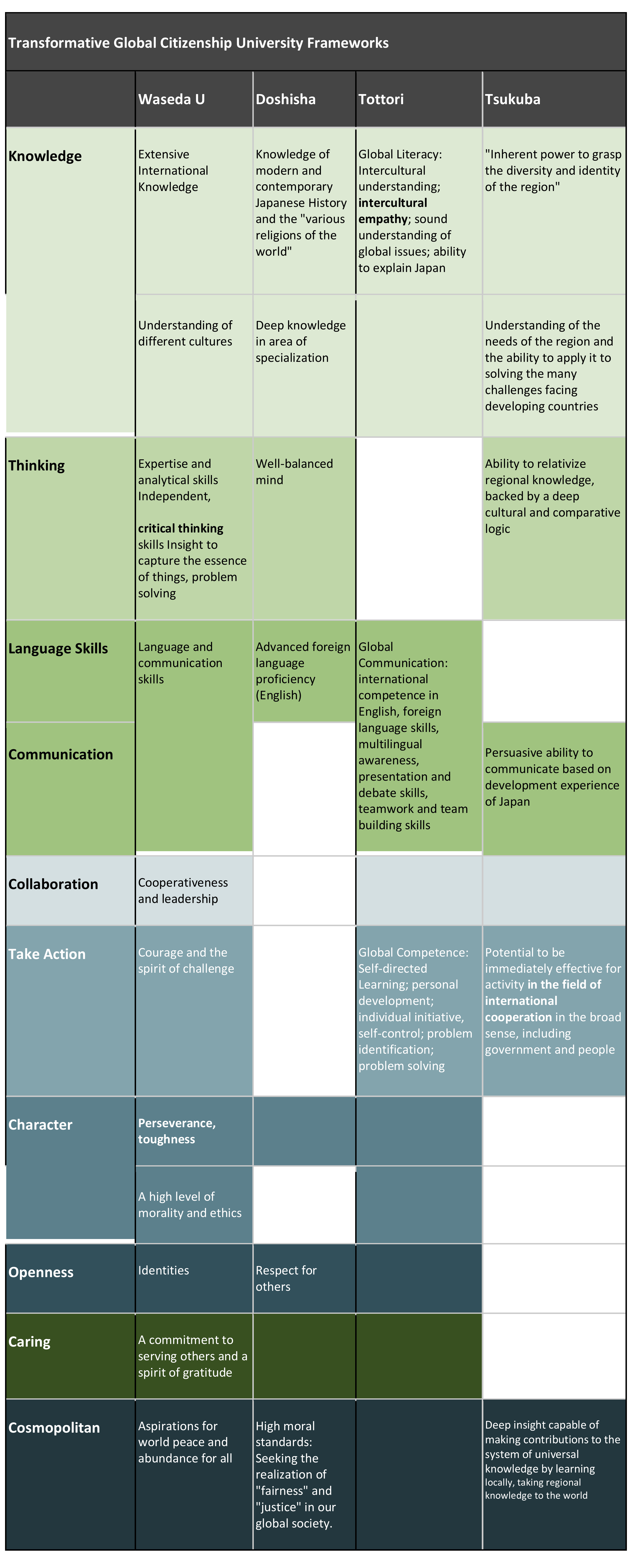
Table 5. Transformative Global Citizen University Frameworks
Final Observations
When viewed alone, one can find value in each of these global competency targets. But when viewed side-by-side, we can clearly see differences in motivation, and the depth of consideration these institutions have for other people and the planet. While the competitive frameworks may do an admirable job of addressing students’ needs for the international job market, calling them ‘global’ competencies is a misnomer. These competencies are mainly for the benefit of individual citizens belonging to one nation, who are to compete on the international stage for the benefit of Japan, and quite possibly at the expense of others. This in turn, has the potential to exacerbate global inequality, rather than contribute to global equality.
Phase 3: Top Global University Competency Building Strategies Comparison
The GGJ Outlines also detail how the universities planned to instill these competencies in their students. The Outlines were written using a standard format and approaches were divided into five categories pre-determined by MEXT:
1. Internationalisation of the Curriculum
2. Efforts to Cultivate Global Human Resources
3. Improvement of Foreign Language
4. Faculty Development
5. Study Abroad
The 10 target TGU development strategies were compared side by side, for trends, innovations and potential best practices. As with the other studies, information was organised on spreadsheets, that were and coded by concept and colour. On occasion, competencies or strategies that seemed novel, unique, or innovative were highlighted.
Among the ten proposals, we can see competitive and transformational frameworks. In addition there are soft global citizen frameworks that fall somewhere in between neoliberal and global. Again, the transformative frameworks propose competencies that go beyond those relating only to the individual, and place importance on competencies that benefit others (e.g. caring, open-mindedness, cosmopolitan, etc.).
The same GGJ proposals that contained TGU global competency frameworks also contained strategies on how the universities would foster these competencies in the following categories:
1. Internationalisation of the Curriculum
2. Efforts to Cultivate Global Human Resources
3. Improvement of Foreign Language Education
4. Faculty Development
5. Study Abroad
On Tables 6, 7 and 8, the same ten universities’ responses are arranged according to the above categories. Below I comment on competency building trends and potential innovations.
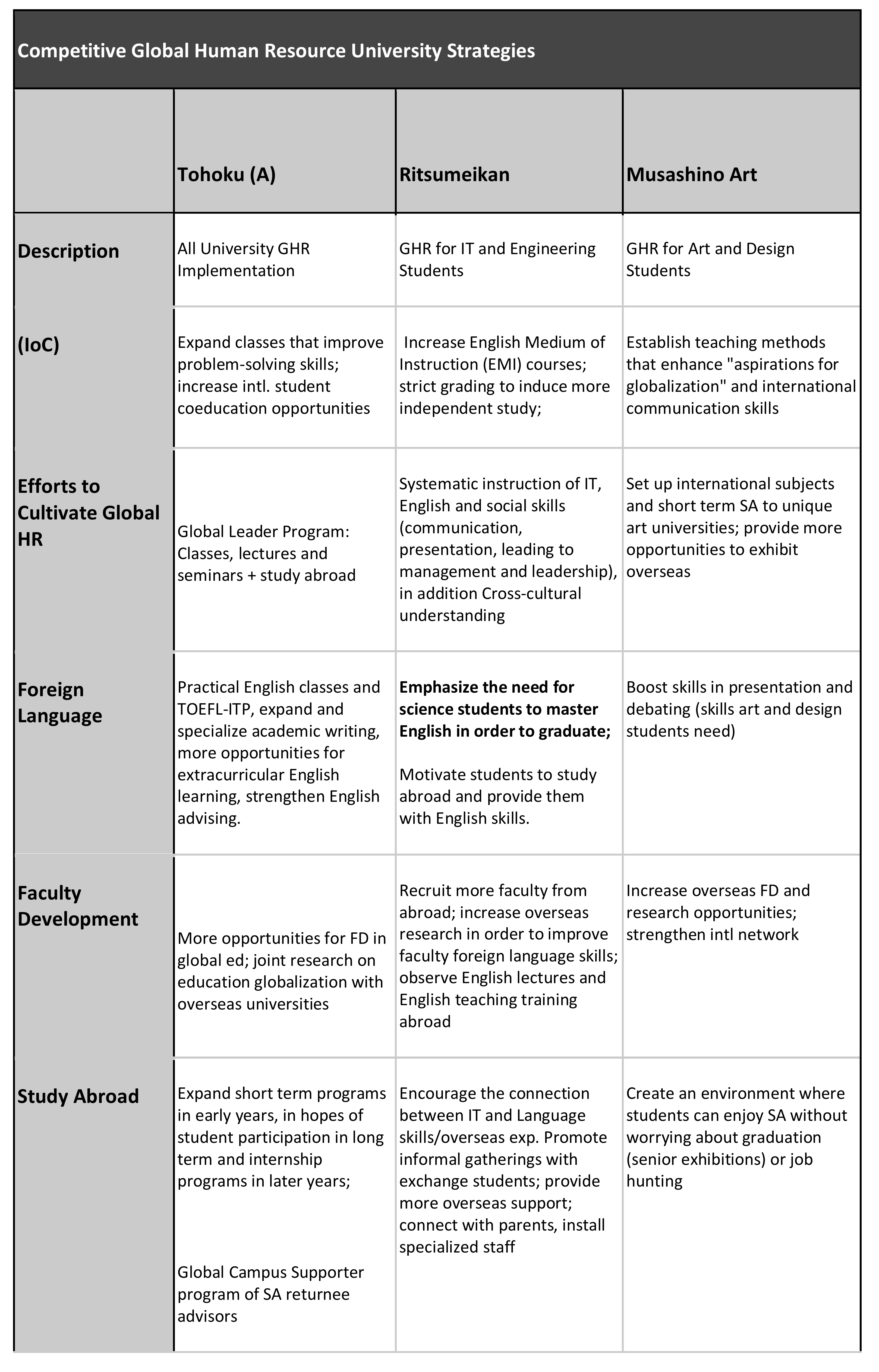
Table 6. Competitive Global Human Resource University Strategies
Internationalisation of the Curriculum and Efforts to Cultivate Global Human Resources
Internationalisation trends among the sampled institutions included the development of new programs both all-campus (Type A) and targeting particular departments (Type B): Tohoku University launched a “Global Leader Program;” at Tsukuba, students are to be able pursue an International Areas Studies Master’s Degree. Other universities developed new global courses: Tottori planned to incorporate Global Education courses into its General Education program for all students, and Tohoku planned to expand classes that improve problem-solving skills and provide students with more coeducation opportunities with international students.
Improvement of Foreign Languages
Participating universities approached the improvement of language education in a number of ways. Not surprisingly, improvements were centred around English language education only, while there was no mention of other languages. Actions focused on making the English entrance exams more comprehensive (to include all listening and speaking components, in addition to reading, writing, and grammar). Some suggested that TOEIC or TOEFL be accepted as a substitute for the entrance exams. Universities also wrote about class changes. Waseda and KGU declared that they would provide smaller classes and Tohoku reported that English lessons should focus more on practical use of the language. Tohoku University also stated that they would strengthen English advising and add more extracurricular opportunities to study English on campus. Improving academic writing was also a common theme. Doshisha mentioned setting a Common European Framework (CEFR) Benchmark goal of B1 for all students by graduation (A2 in other languages). Tottori planned to create a global content language integrated learning (CLIL) class, and Akita would require all of its students to study abroad for one year.
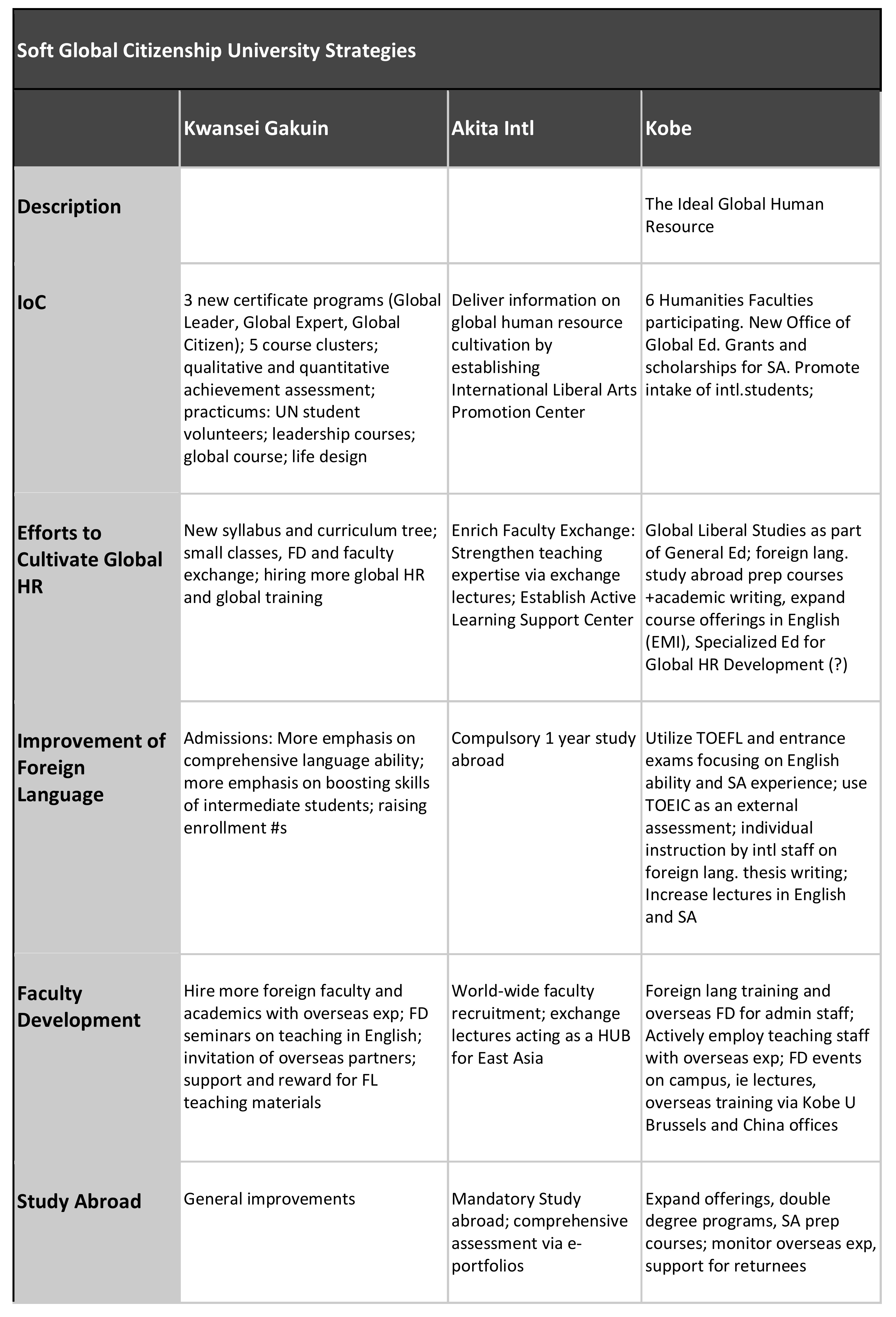
Table 7. Soft Global Citizenship University Strategies
Faculty Development
Universities in this study seem to agree that faculty development is vital to achieving their goals. While most universities stated that they would hire more international staff or those who had overseas teaching experience, institutions also listed ways in which they would provide global training to current faculty as well. Many wrote of lecturers' exchanges and workshops on topics such as team teaching, EMI, and Content Language-based Instruction (CLIL), in other words, teaching other subjects in English. Others claimed they would provide more opportunities for staff to train (and teach in the case of Waseda) overseas. Tsukuba and Kobe stated that they would also provide overseas training for administrative staff as well as instructors.
Promotion of Study Abroad
Finally all universities promised they would attempt to increase study abroad. It has been well-publicised that prior to 2012, the number of Japanese students studying abroad had been dropping (Yonezawa, 2014). These universities attempted to address this problem by expanding their program offerings. Tottori specified that in order to promote global citizenship, they would take more students to developing countries on service-learning programs. Most universities stated they would attempt to increase student motivation to travel, although few were specific as to how they would actually do it. Waseda and Musashino claimed they would collaborate with businesses and corporations seeking to hire students with study abroad experience, thus alleviating student concerns about searching for jobs and graduation requirements.
Keeping tabs on students overseas seems to have been another concern as many universities stated that they would increase support for on study abroad. The exact nature of the support is for the most part unclear in the written initiatives; however, Tsukuba University wrote that it would keep touch with its students via Skype. As someone who has spent many years working in the field of study abroad, this is actually a practice I do not recommend, as too much contact with people from home can hinder the student from adjusting to the host culture. Besides, reputable study abroad partners always have support staff in the host country who can help students directly. That being said, an exchange organisation I used to work for, AFS, has developed a Global Competency Certificate Program, which allows students studying abroad to stay in contact with a facilitator from their home institution, and engage in reflective assignments that help them to build global competencies. For universities wishing to keep tabs on their students abroad, this type of structure program could be ideal.
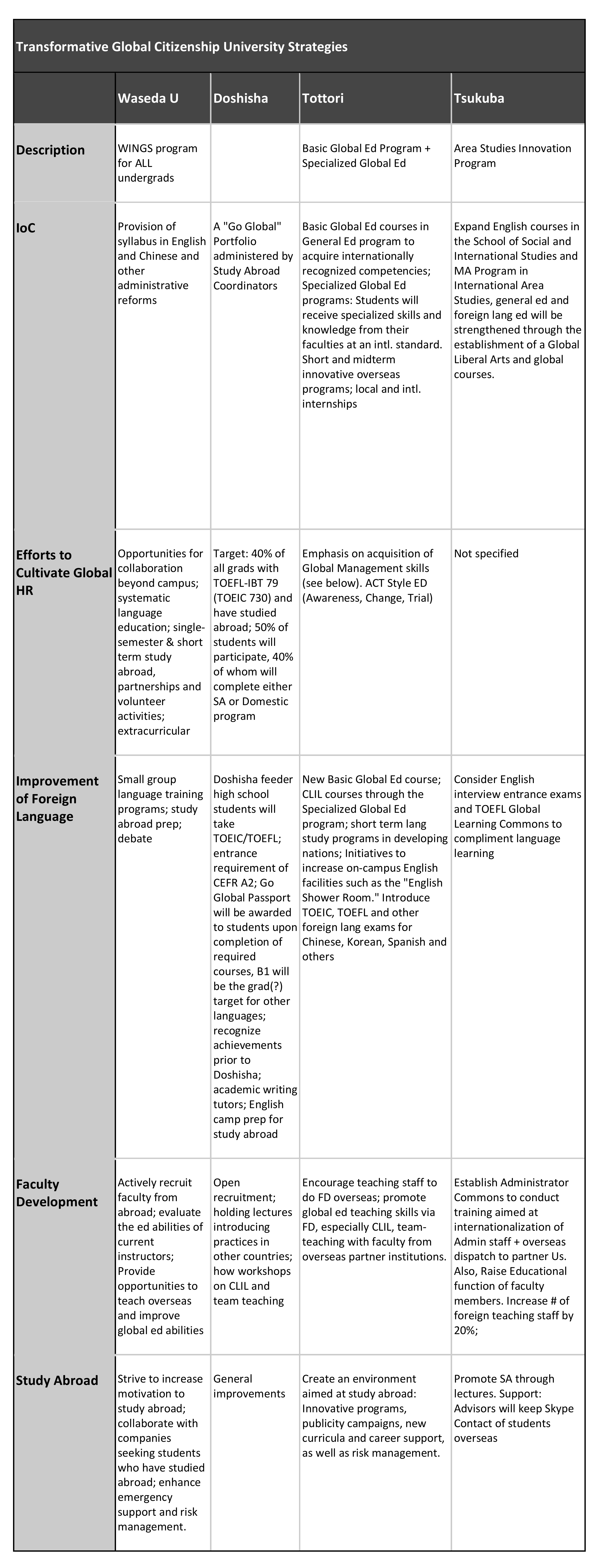
Table 8. Transformative Global Citizenship University Strategies
Conclusion
The GGJ initiatives revealed that a great deal of thought had gone into deciding which global competencies universities wanted their students to gain. It is interesting to note differences in the competencies articulated by international organisations, MEXT and Japanese universities. Some TGU competency frameworks looked remarkably different from those of MEXT, particularly those that favoured a more transformative competencies. These universities may have been influenced by international organisations like the OECD, the IB, UNESCO, existing literature on global citizenship, or GCED-familiar staff. It is also interesting to note that many older, private universities in Japan (particularly Christian institutions like KGU and Doshisha), have transformative target competencies that align with their long-established mission statements. This demonstrates that global citizenship education is by no means a new concept in Japan.
We can also assume that at the classroom level, professors tasked with teaching students have their own ideas regarding global education, which may differ from their host institutions. They may also be working with no definition at all, and lack understanding of what global citizenship is. Hence faculty development and hiring teachers with international backgrounds is crucial for emerging global education programs.
Properly to ensure that all agree on the global education goals of an institution, Japanese universities may want to borrow a practice from IB high schools:
1. Post global competency goals prominently everywhere on campus and in the university literature. Imbed the competencies into the university’s mission. The IB does this with its Learner Profile. Students, teachers and administrators alike are reminded daily of the ten traits needed to become internationally-minded global citizens.
2. Systematically incorporate a transformative global competency framework into lesson planning for all subjects. This is already being done at some TGUs.
There are many innovative strategies in the GGJ initiatives. Particularly impressive are institutions like Tottori University’s well-organised plan to make global education a CLIL course that will be part of the university’s general education program. Their commitment to develop new study abroad courses in developing countries is also commendable. It would be good to see other institutions send students to other countries besides the usual “safe” English-speaking nations.
The next step will be to examine TGUs more closely to see how their reforms are progressing via interviews with administrators, teachers and students. Judging from this sampling of outlines, there is hope that Japanese universities will produce more transformative “top global” citizens.
Limitations of this study
This was a study of proposals for global citizenship development, written in 2012. It was beyond the scope of this study to examine how universities followed through with their goals and strategies. Investigations on whether and how these proposals were realised may provide more insight on successful approaches to global citizenship education in Japan.
References
Akita International University (2012) 平成24年度グローバル人材育成推進事業採択事業の概要及び個別審査結果(タイプA:全学推進型/タイプB:特色型)[2012 Promotion of Global Human Resources Application Results and Project Overviews]. Retrieved from: http://www.jsps.go.jp/j-gjinzai/h24_kekka_saitaku.html
Aktas, F., Pitts, K., Richards, J. C., & Silova, I. (2017). Institutionalizing Global Citizenship: A Critical Analysis of Higher Education Programs and Curricula. Journal of Studies in International Education, 21(1), 65-80. DOI: https://www.doi.org/10.1177/1028315316669815
American College on Education (n.d.), “CIGE Model for Comprehensive Internationalisation.” Washington DC: American Council on Education.
Amiss, C. Innovate, educate, create: IB Africa, Europe & Middle East Regional Conference 2013. [PDF document]. Retrieved from http://www.ibo.org/contentassets/019c8bebf2a84f2c8493ae56de3c8c34/125-christineamisswhatisanibeducation.pdf
Andreotti, V. D. O. (2006). Soft versus Critical Global Citizenship Education. Development Education in Policy and Practice. doi: https://www.doi.org/10.1057/9781137324665.0009
Bowen, G. A. (2009). Document Analysis as a Qualitative Research Method. Qualitative Research Journal, 9(2), 27-40. doi:https://www.doi.org/10.3316/qrj0902027
Brewer, E. and Leask, B. (2012) Internationalisation of the Curriculum. The SAGE Handbook of International Higher Education, 245-265. doi: https://www.doi.org10.4135/9781452218397.n2
Calloway-Thomas, C., Arasaratnam-Smith, L., Deardorff, D. (2017). The role of empathy in fostering intercultural competence. In Deardorff, D. and Arasaratnam-Smith, L., International Competence in Higher Education. New York: Routledge.
DeCaro, L.E. (2014). Who is a Global Citizen? Citizenship Education Research Journal 4 (1) (3-12), https://ojs-o.library.ubc.ca/index.php/CERJ/article/view/3.
Dill, J. S. (2015). Longings and limits of global citizenship education. New York, NY. Routledge.
Doshisha University (2012) 平成24年度グローバル人材育成推進事業採択事業の概要及び個別審査結果(タイプA:全学推進型/タイプB:特色型)[2012 Promotion of Global Human Resources Application Results and Project Overviews]. Retrieved from: http://www.jsps.go.jp/j-gjinzai/h24_kekka_saitaku.html
Garson, K. (2012). Ethical Considerations for Internationalisation: Perspectives from Global Citizenship Education. Place of publication not identified: Distributed by ERIC Clearinghouse.
Hiroshima University (2012) 平成24年度グローバル人材育成推進事業採択事業の概要及び個別審査結果(タイプA:全学推進型/タイプB:特色型)[2012 Promotion of Global Human Resources Application Results and Project Overviews]. Retrieved from: http://www.jsps.go.jp/j-gjinzai/h24_kekka_saitaku.html
International Baccalaureate (n.d). IB Learner Profile. Retrieved from: https://www.ibo.org/contentassets/fd82f70643ef4086b7d3f292cc214962/learner-profile-en.pdf.
Jenkins, N. (2015, September). Alarm Over Huge Cuts to Humanities and Social Sciences at Japanese Universities. Time. Retrieved from: https://time.com/4035819/japan-university-liberal-arts-humanities-social-sciences-cuts/.
Jooste, N., & Heleta, S. (2017). Global Citizenship Versus Globally Competent Graduates: A Critical View From the South. Journal of Studies in International Education, 21(1), 39–51.
Jorgenson, S. and Shultz, L. (2012), Global Citizenship Education (GCE) in Post-Secondary Institutions: What is Protected and what is Hidden under the Umbrella of GCE? Journal of Global Citizenship and Equity Education, Vol. 2, No. 1 (Special Edition) 2012, https://journals.sfu.ca/jgcee
Kahn, H. E., & Agnew, M. (2017). Global Learning Through Difference. Journal of Studies in International Education, 21(1), 52-64. doi: https://www.doi.org/10.1177/1028315315622022
Kim, Y. (2018). Holistic Global Citizenship Education & Global Entrepreneurship for the Challenge of the 21st Century. American Journal of Educational Research and Reviews. doi: https://www.doi.org/10.28933/ajerr-2018-05-0302
Kosaka, K. (2014, February 14). Globally focused International Baccalaureate diploma needs local-level support. Japan Times. Retrieved from https://www.japantimes.co.jp/community/2014/02/09/issues/globally-focused-international-baccalaureate-diploma-needs-local-level-support/
Knight, J. (2013). Probable and preferable futures of Internationalisation. In De Wit, H., Hunter, F., Johnson, L and van Liempd, H. eds. Possible futures: The next 25 years of Internationalisation of higher education 81-84. Amsterdam: European Association for International Education
———(2012). Concepts, Rationales, and Interpretive Frameworks in the Internationalisation of Higher Education. The SAGE Handbook of International Higher Education, 27-42. doi: https://www.doi.org/10.4135/9781452218397.n2
Kobe University (2012) 平成24年度グローバル人材育成推進事業採択事業の概要及び個別審査結果(タイプA:全学推進型/タイプB:特色型)[2012 Promotion of Global Human Resources Application Results and Project Overviews]. Retrieved from: http://www.jsps.go.jp/j-gjinzai/h24_kekka_saitaku.html
Kwansei Gakuin University (2012) 平成24年度グローバル人材育成推進事業採択事業の概要及び個別審査結果(タイプA:全学推進型/タイプB:特色型)[2012 Promotion of Global Human Resources Application Results and Project Overviews]. Retrieved February from: http://www.jsps.go.jp/j-gjinzai/h24_kekka_saitaku.html
Lilley, K., Barker, M., & Harris, N. (2017). The Global Citizen Conceptualized. Journal of Studies in International Education, 21(1), 6–21. doi: https://doi.org/10.1177/1028315316637354
MEXT, (n.d). Selection for the FY2012 Project for Promotion of Global Human Resource Development. Retrieved from http://www.mext.go.jp/en/policy/education/highered/title02/detail02/sdetail02/sdetail02/1374093.htm
Musashino Art University (2012) 平成24年度グローバル人材育成推進事業採択事業の概要及び個別審査結果(タイプA:全学推進型/タイプB:特色型)[2012 Promotion of Global Human Resources Application Results and Project Overviews]. Retrieved from: http://www.jsps.go.jp/j-gjinzai/h24_kekka_saitaku.html
Newby, H., Weko, T., Breneman, D., Johanneson, T., & Maassen, P. (2009). OECD reviews of tertiary education: Japan. Retrieved from: https://www.oecd.org/japan/42280329.pdf
New Pedagogies for Deep Learning (2014, October). New Pedagogies for Deep Learning Lab. Toronto, Ontario, Canada
Oxfam (2015). Education for Global Citizenship: A Guide for Schools, London: Oxfam.
P21. (n.d.). Retrieved February 13, 2018, from http://www.p21.org/
Ramos, G. and Schleicher, A. (2016). Global Competency for an inclusive world, OECD.
Reimers, F. (2011). "Global Competency" Is Imperative for Global Success, The Chronicle of Higher Education 55 (21), https://www.researchgate.net/publication/234682898_Global_Competency_Is_Imperative_for_Global_Success.
Ritsumeikan University (2012) 平成24年度グローバル人材育成推進事業採択事業の概要及び個別審査結果(タイプA:全学推進型/タイプB:特色型)[2012 Promotion of Global Human Resources Application Results and Project Overviews]. Retrieved from: http://www.jsps.go.jp/j-gjinzai/h24_kekka_saitaku.html
Schattle, H. (2008). The practices of global citizenship. Plymouth, UK: Rowman & Littlefield.
Shultz, L. (2007). Educating for Global Citizenship: Conflicting agendas and understandings. Alberta Journal of Educational Research, 53, 248-258.
Singapore Ministry of Education. Values at the Core of 21st Century Competencies. [PDF document]. Retrieved from https://www.moe.gov.sg/docs/default-source/document/education/21cc/files/annex-21cc-framework.pdf
Tohoku University (2012) 平成24年度グローバル人材育成推進事業採択事業の概要及び個別審査結果(タイプA:全学推進型/タイプB:特色型)[2012 Promotion of Global Human Resources Application Results and Project Overviews]. Retrieved from: http://www.jsps.go.jp/j-gjinzai/h24_kekka_saitaku.html
Tottori University (2012) 平成24年度グローバル人材育成推進事業採択事業の概要及び個別審査結果(タイプA:全学推進型/タイプB:特色型)[2012 Promotion of Global Human Resources Application Results and Project Overviews]. Retrieved from: http://www.jsps.go.jp/j-gjinzai/h24_kekka_saitaku.html
Tsukuba University (2012) 平成24年度グローバル人材育成推進事業採択事業の概要及び個別審査結果(タイプA:全学推進型/タイプB:特色型)[2012 Promotion of Global Human Resources Application Results and Project Overviews]. Retrieved from: http://www.jsps.go.jp/j-gjinzai/h24_kekka_saitaku.html
UNESCO, (2015). Global citizenship education topics and learning objectives. Retrieved from http://unesdoc.unesco.org/images/0023/002329/232993e.pdf.
Wang, Y., Deardorff, D., and Kulich, S. (2017). Chinese perspectives on intercultural competence in international higher education. Intercultural Competence in Higher Education: International Approaches, Assessment and Application, 95-109. New York, NY. Routledge
Waseda University (2012) 平成24年度グローバル人材育成推進事業採択事業の概要及び個別審査結果(タイプA:全学推進型/タイプB:特色型)[2012 Promotion of Global Human Resources Application Results and Project Overviews]. Retrieved from: http://www.jsps.go.jp/j-gjinzai/h24_kekka_saitaku.html
Yonezawa, A. (2014). Japan’s Challenge of Fostering “Global Human Resources:” Policy Debates and Practices. Japan Labor Review. Volume. 11, pp. 37-52.
Article copyright Thomas Fast




The electronic journal of contemporary japanese studies was founded on 9 January 2001.
Page created 16 December 2019, last modified 16 December 2019.
Email the webmaster if you have any problems.
Copyright electronic journal of contemporary japanese studies.


